Home Blog

Study in UK For Free With Think Big Scholarships at University of Bristol, United Kingdom

0
Study in UK For Free With Think Big Scholarships at University of Bristol, United Kingdom
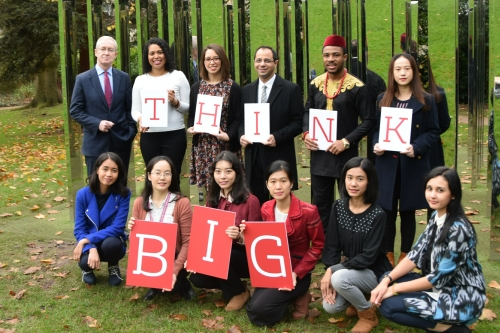
Think Big Scholarships
Study in the UK in 2026 🇬🇧 at Bristol University. Think Big Scholarships are available for students at the University of Bristol, United Kingdom.

The University of Bristol offers a number of scholarship programs for students, including the Think Big Scholarships. These scholarships are designed to support students who have a strong academic record and demonstrate financial need. They are intended to help students cover the costs of tuition, fees, and other expenses related to their studies.

Think Big Scholarships are awarded based on merit and financial need. To be eligible, students must be applying to the University of Bristol for an undergraduate or postgraduate degree program and must meet the academic and financial criteria set by the university.

Students who are awarded a Think Big Scholarship will receive a package of support that may include tuition fee waivers, bursaries to help cover living costs, and access to additional support and resources to help them succeed in their studies.

It is worth noting that the specific terms and conditions of the Think Big Scholarships may vary from year to year, so it is important for students to check the university’s website or contact the admissions office for more information on the current requirements and application process.

Prospective international students can apply for funding towards the cost of tuition fees and living costs.
Scholarship awards for postgraduate international students are valued at £6,500, £13,000, and £26,000 per year and can only be used towards the cost of tuition fees.
Applicants may also be eligible to receive a £3,000 living cost bursary during their first year of study.

Think Big Undergraduate Scholarship Award

Scholarship awards for undergraduate international students are valued at £6,500 and £13,000 per year and can only be used towards the cost of tuition fees.

Applicants may also be eligible to receive a £3,000 living cost bursary during their first year of study.

Scholarship Eligibility

You can apply if you:

  • are an overseas student for fee purposes
  • have applied to start any full-time undergraduate course, excluding Medicine, Dentistry and Veterinary Science at the University of Bristol, starting in September 2026.

How to apply

Apply using the international scholarships online application form. You can find more details about this form in our guidance on how to apply for international scholarships.

The application process is the same for all University of Bristol international scholarships so the terms and conditions are the same too. Read the terms and conditions before applying.

How to apply

Deadline

Applications will close at 10 AM (UK time) on Monday, 27 February 2026.

Assessment process

Successful applicants will be contacted on or before 6 April 2026.

Unsuccessful applicants will be notified shortly after.

Further details

If you apply for this scholarship, you will also automatically be considered for any other University of Bristol international scholarships that you are eligible for. You do not need to submit two separate applications.

The application process is the same for all University of Bristol international scholarships so the terms and conditions and frequently asked questions are also the same.

Think Big Postgraduate Scholarship Award

Prospective international students can apply for funding towards the cost of tuition fees and living costs.

Scholarship awards for postgraduate international students are valued at £6,500, £13,000 and £26,000 per year and can only be used towards the cost of tuition fees.

Applicants may also be eligible to receive a £3,000 living cost bursary during their first year of study.

Scholarship Eligibility

You can apply if you:

  • are an overseas student for fee purposes
  • have applied to start any one-year, full-time master’s programme, or one of our eligible two-year programmes – Social Work (MSc) and Law (MA), starting in September 2026.

How to apply

Apply using the international scholarships online application form. You can find more details about this form in our guidance on how to apply for international scholarships.

The application process is the same for all University of Bristol international scholarships so the terms and conditions are the same too. Read the terms and conditions before applying.

How to apply

Deadline

Applications will close at 10 AM (UK time) on Monday 24 April 2026.

Assessment process

Successful applicants in round two will be contacted on or before 21 May 2026.

Unsuccessful applicants will be notified shortly after.

Further details

If you apply for this scholarship, you will also automatically be considered for any other University of Bristol international scholarships that you are eligible for. You do not need to submit two separate applications.

The application process is the same for all University of Bristol international scholarships to the terms and conditions and frequently asked questions are also the same.

FAQs

1. What is the Think Big Scholarship at the University of Bristol?

The Think Big Scholarship is a fully-funded scholarship program offered by the University of Bristol, United Kingdom, aimed at supporting outstanding international students who wish to pursue undergraduate or postgraduate studies. It covers tuition fees, living expenses, and sometimes additional allowances depending on the program. The scholarship seeks students with strong academic achievements, leadership potential, and a commitment to making a positive impact in their communities.

2. Who is eligible to apply for the Think Big Scholarship?

Eligibility criteria generally include:

Being an international student (non-UK/EU).

Having an excellent academic record.

Meeting the University of Bristol’s entry requirements for the chosen course.

Demonstrating leadership skills, community involvement, or extracurricular achievements.
Some scholarships may also target specific regions or fields of study, so it’s important to check the exact requirements on the University of Bristol’s official scholarship portal.

3. How do I apply for the Think Big Scholarship?

To apply:

Apply for your chosen course at the University of Bristol.

Complete the Think Big Scholarship application form on the university’s official scholarship portal.

Submit supporting documents such as transcripts, recommendation letters, and a personal statement highlighting your achievements and ambitions.

Meet any application deadlines — usually early in the academic year. Successful candidates are shortlisted based on merit, leadership potential, and alignment with the scholarship’s goals.

4. What benefits does the Think Big Scholarship provide?

Recipients of the Think Big Scholarship can expect:

Full or partial tuition fee coverage.

Monthly living allowance or stipend.

Support for travel and study-related expenses.

Access to University of Bristol facilities, mentorship, and networking opportunities.
This scholarship essentially allows students to study in the UK without financial burden, while also gaining a strong platform for personal and professional growth.


$100K to Move to USA: Construction Visa Jobs + Sponsorship 2025/2026

0

Imagine waking up in a brand-new apartment in Houston or Tampa, reaching for your phone, and seeing $7,200 deposited—your first bi-weekly paycheck after relocating to the United States with everything paid for. Just eighteen months ago, you were navigating Lagos traffic for three hours daily, working six-day weeks for ₦350,000 monthly, watching your savings disappear to inflation and wondering if all the hustle would ever translate into real financial security. Today, you’re operating a tower crane 40 stories above Dallas, earning more in two weeks than you used to make in six months, with a clear pathway to permanent residency and the ability to bring your family to join you.

This isn’t fantasy. This is the reality that over 3,200 Nigerian construction workers experienced in 2024 alone, according to U.S. visa approval data. Major American construction firms—names like Bechtel, Turner Construction, Kiewit, Fluor, AECOM, and hundreds of regional contractors you’ve never heard of—are desperately sponsoring H-2B temporary visas and EB-3 green cards because they face a catastrophic shortage exceeding 520,000 skilled workers in 2025-2026. They’re not just offering jobs; they’re providing complete relocation packages: round-trip flights covered, temporary housing for 60-90 days, health insurance from day one, work tools and safety gear provided, immigration lawyer fees paid in full, and sometimes signing bonuses reaching $8,000-$12,000 just for showing up ready to work.

The financial numbers sound almost unbelievable until you talk to someone actually living it. Pipe welders with 5-7 years of solid experience are clearing $95,000-$118,000 annually in Houston’s petrochemical corridor, with overtime pushing some past $130,000 in their first year. Industrial electricians working data center construction in Northern Virginia are hitting $102,000-$125,000. Heavy equipment operators on California infrastructure projects see total compensation packages reaching $108,000-$140,000 when you include benefits, per diems, and overtime. These aren’t senior management positions requiring MBA degrees—these are skilled trades roles that reward the exact hands-on experience many Nigerians already possess from working on Lekki developments, Port Harcourt refineries, Abuja housing projects, and Lagos rail construction.

But here’s what separates this article from the thousand other “work abroad” posts cluttering your timeline: we’re not selling dreams or collecting your email for some dubious “registration portal.” This is a comprehensive, data-backed roadmap built from current USCIS approval rates, verified job postings from Fortune 500 construction companies, consultation with immigration lawyers specializing in employment-based visas, and direct conversations with Nigerians who made this exact transition between 2023 and early 2025. If you have documented experience as a welder, electrician, plumber, carpenter, heavy equipment operator, concrete finisher, HVAC technician, or pipefitter—and you’re willing to invest focused effort over the next 6-12 months—you’re looking at one of the most powerful wealth-building and life-changing opportunities available to skilled workers anywhere in the world right now.

Why 2025/2026 Represents a Once-in-a-Generation Perfect Storm

The convergence of factors creating this opportunity is unprecedented and unlikely to repeat. Understanding why American construction companies are so desperate—desperate enough to sponsor foreign workers they’ve never met, pay immigration attorney fees averaging $5,000-$8,000 per worker, and cover relocation costs exceeding $12,000—helps you recognize the genuine nature of these opportunities versus the scams that inevitably emerge wherever money and hope intersect.

The Infrastructure Tsunami: The Bipartisan Infrastructure Law injected $1.2 trillion into American infrastructure over five years, with $550 billion representing entirely new federal spending on roads, bridges, public transit, water systems, broadband, and electric grid modernization. The Inflation Reduction Act added another $369 billion targeting renewable energy, electric vehicle infrastructure, and climate resilience projects. The CHIPS and Science Act contributed $280 billion more for semiconductor manufacturing facilities, research centers, and advanced technology infrastructure. This represents approximately $2 trillion in construction spending compressed into a 5-7 year window—the largest infrastructure investment in American history since the Interstate Highway System in the 1950s.

The Demographic Crisis: The average American construction worker is 42.9 years old. For every five construction workers retiring, fewer than two younger workers enter the trades. American parents spent three decades pushing their children toward university degrees and office careers, creating a cultural stigma around “blue-collar” work that left construction facing catastrophic labor shortages even before the infrastructure boom. Construction companies cannot wait 10-15 years to rebuild domestic training pipelines—projects are starting now, contracts are signed, and every vacant position threatens schedule delays carrying financial penalties of $25,000-$100,000 per day on major projects.

The Private Sector Explosion: Beyond government infrastructure spending, private industry is building at unprecedented scale. Tech companies are constructing massive data centers to support AI computing—each facility employing 800-1,500 construction workers over 18-24 months. Electric vehicle manufacturers are building battery plants, assembly facilities, and charging networks. Pharmaceutical companies are reshoring manufacturing to America. Logistics companies are building distribution centers to support e-commerce growth. Residential construction is scrambling to address housing shortages in Sun Belt states where populations are exploding. This private construction activity equals or exceeds government infrastructure spending, doubling the total demand for skilled workers.

The Immigration Policy Window: Current U.S. immigration policies, while complex, remain relatively favorable for employment-based visas particularly in shortage occupations. The H-2B temporary worker program has seen cap increases and returning worker exemptions that expanded availability. The EB-3 employment-based green card pathway continues processing applications, with workers from most countries (including Nigeria) facing manageable 2-4 year timelines rather than the decade-plus waits affecting Indian and Chinese applicants. While political rhetoric around immigration stays heated, the construction industry’s lobbying power has so far protected worker visa programs from significant restrictions because builders understand they cannot complete projects without international labor.

This convergence—massive construction spending, severe domestic labor shortages, private sector growth, and open immigration pathways—creates what immigration lawyers and construction recruiters are calling the “golden window” for skilled trades workers. But windows close. As American training programs eventually scale up, as automation replaces some positions, or as immigration policies potentially tighten, this specific opportunity will narrow. The workers capitalizing now are positioning themselves not just for immediate $100,000+ earnings but for permanent American residency, family immigration, and generational wealth creation impossible to achieve in most origin countries regardless of how hard you work.

The Emotional Reality Nobody Tells You About

The financial transformation gets all the attention in articles and YouTube videos, but the emotional journey—the psychological shift from struggling Nigerian tradesperson to thriving American construction worker—rarely gets honest discussion. Let’s talk about what actually happens, the feelings nobody prepares you for, because understanding this reality helps you navigate the transition successfully rather than being blindsided by culture shock, homesickness, and the unexpected challenges that accompany even positive life changes.

The First Paycheck Moment: When Chukwudi, a 34-year-old electrician from Enugu, received his first American paycheck—$3,600 for two weeks of work as an industrial electrician in Atlanta—he sat in his apartment and cried. Not tears of joy exactly, but something more complicated. Relief that the gamble of leaving everything familiar had paid off. Disbelief that he’d earned more in 80 hours than he used to make in four months. Guilt about his younger siblings still grinding in Nigeria. And a strange emptiness because the person he most wanted to celebrate with—his late father who taught him the trade—wasn’t there to see it. This emotional complexity is normal. The money is real, the opportunity is genuine, but it doesn’t erase the sacrifice of distance from family, the loneliness of starting over in a foreign country, or the pressure of being the family member who “made it” and now carries expectations to help everyone else.

The Grocery Store Revelation: Ifeanyi, a 29-year-old welder from Port Harcourt working in Houston, describes his first trip to HEB (a Texas grocery chain) as almost overwhelming. Aisles stretching endlessly, more varieties of bread than he’d ever seen in one place, meat sections with steaks he could actually afford, and most surreal—everything was there. No shortages. No “this product has not arrived yet, check back next week.” No power cut interrupting refrigeration so half the products are spoiled. Just abundance, all the time, reliably. “I stood there with a shopping cart, trying to decide between eight types of chicken breast, and I just started laughing,” he recalls. “My wife on video call asking what’s funny, and I couldn’t explain it. It was hitting me that I could buy food without strategy, without rushing to three different markets to find items, without calculating if I can afford protein this week. That’s wealth I didn’t even know I was missing.”

The Remittance Power: Sending money home transforms from occasional struggle to strategic family investment. Oluwaseun, a 38-year-old carpenter from Lagos working in Phoenix, sends $1,200-1,500 monthly to Nigeria (₦1.8-2.2 million at current rates), supporting his parents, paying for his younger sister’s university education, and building a rental property that will generate passive income when he eventually returns. “The first time I sent ₦1.5 million in one transfer, my mother called me crying thinking something was wrong, asking if I was in trouble, where did I get this money,” he remembers. “She couldn’t process that this was just normal now—that in America, my skills are valued at levels we couldn’t have imagined. That phone call, hearing her voice change from worry to disbelief to gratitude—that’s why we do this. Not just for ourselves, but to change what’s possible for the whole family.”

The Loneliness Tax: But honest discussion requires acknowledging the costs beyond money. Missing your daughter’s first day of school because you’re 7,000 miles away hurts in ways no salary compensates for. Watching Nigerian weddings and family celebrations on WhatsApp video while you’re eating alone in your American apartment creates a specific kind of ache. The cultural isolation of being the only African on a construction site where coworkers are friendly but you don’t share references, humor doesn’t translate perfectly, and nobody truly understands where you came from or what this opportunity means. Some workers thrive in this independence; others struggle with depression and homesickness that undermines their performance and satisfaction despite financial success.

The Identity Shift: Perhaps most subtle but significant—you stop being yourself and become “the Nigerian guy” or “our African worker” in contexts where you’re the only one. Your entire identity, your complexity as a person, gets reduced to nationality and accent. Some embrace this as ambassador role; others find it exhausting to constantly represent an entire continent in casual conversations. You develop code-switching skills—the way you talk on job sites versus with Nigerian friends versus in formal settings—managing multiple versions of yourself in ways that can feel authentic or exhausting depending on the day.

These emotional realities don’t negate the opportunity—every single worker I interviewed said they’d make the same choice again despite challenges. But understanding the full picture helps you prepare psychologically, maintain realistic expectations, build support systems proactively, and ultimately thrive rather than just survive in your new environment.

Visa Pathways Explained: H-2B vs EB-3 (What Immigration Lawyers Actually Tell You)

Navigating U.S. immigration law without professional guidance is like trying to wire a commercial building using only YouTube videos—theoretically possible but practically foolish and potentially dangerous. This section breaks down what immigration attorneys specializing in employment-based visas actually explain to construction workers, stripping away the confusing legal jargon to help you understand which pathway fits your situation and what realistic timelines and costs look like.

The H-2B Temporary Worker Visa: Fast Entry, Temporary Status

The H-2B visa serves as the quick-entry pathway for skilled trades workers when American construction companies face temporary labor shortages they cannot fill domestically. This isn’t a pathway to permanent residency—it’s designed for temporary employment with defined start and end dates, though it creates opportunities for eventual transition to permanent status through other means.

How H-2B Actually Works: Your prospective employer initiates everything. They must first obtain temporary labor certification from the U.S. Department of Labor by proving they’ve advertised positions domestically, offered prevailing wages (market rates for the area and occupation), and received insufficient qualified applications from U.S. workers. This process requires detailed recruitment documentation—job board postings, newspaper ads, applications received, reasons for rejecting U.S. candidates—making it something only serious employers undertake. After receiving labor certification, employers file Form I-129 petitions with USCIS naming specific foreign workers they wish to employ. Upon USCIS approval, you apply for your H-2B visa at the U.S. embassy in Abuja.

Timeline Reality: Immigration lawyers specializing in H-2B estimate 4-7 months from employer initiating labor certification to visa issuance, assuming no complications. Employers typically start processes 6-8 months before they need workers on site. Rush circumstances exist where employers use emergency labor certifications for unexpected needs, potentially compressing timelines to 2-3 months, but these represent exceptions rather than standard practice.

Duration and Limitations: H-2B initially grants work authorization for up to one year, extendable in one-year increments to three years maximum. After three years, you must leave the United States for at least three consecutive months before becoming eligible for new H-2B petitions. This mandatory departure requirement makes H-2B unsuitable as a standalone permanent immigration strategy—though many workers use initial H-2B employment to build relationships with employers who later sponsor them for EB-3 green cards, effectively using H-2B as a trial period proving their value.

Salary Expectations: H-2B prevailing wages vary dramatically by trade, location, and experience level. The Department of Labor publishes prevailing wage determinations that establish minimum salaries employers must offer—these range from $19-28/hour for general construction laborers to $28-45/hour for skilled electricians, welders, and specialized trades depending on geographic area. In practical terms:

  • Commercial electricians: $58,000-$85,000 base wages
  • Pipe welders: $62,000-$92,000 base wages
  • Heavy equipment operators: $55,000-$82,000 base wages
  • Carpenters (commercial): $52,000-$78,000 base wages
  • Concrete finishers: $48,000-$72,000 base wages

These represent BASE salaries before overtime. Construction commonly involves 50-60 hour work weeks, with time-and-a-half pay for hours beyond 40 weekly. An electrician earning $30/hour base who works 55 hours weekly earns: (40 hours × $30) + (15 hours × $45) = $1,875 weekly = $97,500 annually. This overtime component frequently pushes annual earnings for skilled H-2B workers to $85,000-$115,000.

Cost Structure: Immigration lawyers quote $800-1,800 for H-2B visa consultation and application support, though sponsoring employers almost always cover these costs as part of their recruitment investment. Attempting H-2B applications without legal guidance when complications exist (previous visa denials, employment gaps, criminal records requiring waivers) risks denials creating negative immigration histories affecting future applications. The $1,200 legal consultation represents insurance against $15,000+ in wasted relocation plans.

Family Considerations: H-2B workers can bring spouses and unmarried children under 21 on H-4 dependent visas, but H-4 holders cannot work in the United States. This creates financial pressure if you’re supporting family on a single income in expensive American cities. Some workers leave families in Nigeria initially, establish themselves financially, then bring family once income stabilizes. Others bring everyone immediately accepting temporary single-income constraints. Immigration attorneys recommend honest family discussions about these tradeoffs before application processes begin.

The EB-3 Employment-Based Green Card: Permanent Residency Pathway

The EB-3 immigrant visa represents the holy grail for construction workers seeking permanent U.S. immigration—it grants green card status (permanent residency) from day one rather than temporary work authorization requiring future status changes. This pathway demands more from both workers and employers but offers life-changing benefits including unrestricted employment, family immigration rights, and eventual citizenship eligibility.

Three EB-3 Subcategories Relevant to Construction:

EB-3 Skilled Workers: Positions requiring minimum two years of training or experience. This covers experienced electricians, plumbers, welders, HVAC technicians, heavy equipment operators, carpenters, and most construction trades with documented multi-year experience.

EB-3 Professionals: Positions requiring bachelor’s degrees or foreign equivalents. Construction engineers, architects, project managers with degrees, and similar degreed positions qualify here.

EB-3 Other Workers (unskilled): Positions requiring less than two years of training. General construction laborers, helpers, entry-level positions fit this category, though processing times run substantially longer than skilled worker or professional categories.

The PERM Labor Certification Marathon: EB-3 requires employers to obtain permanent labor certification through the PERM process—significantly more rigorous than H-2B temporary certification. Employers must conduct extensive domestic recruitment campaigns proving no qualified U.S. workers are available. This involves advertising through newspapers, online job boards, state workforce agencies, and sometimes radio or ethnic publications, interviewing applicants, documenting legitimate business reasons for rejecting U.S. candidates, and providing detailed recruitment reports to the Department of Labor.

Immigration lawyers specializing in PERM describe this as the most documentation-intensive part of employment-based immigration. A single missing advertisement, improperly worded job description, or inadequately documented rejection reason can trigger PERM denials requiring companies to restart from zero. This is why PERM processing typically requires 10-18 months even without complications—the Department of Labor scrutinizes every detail because permanent labor certifications grant foreign workers immigration benefits lasting decades.

Post-PERM Processing Steps: After PERM approval, employers file Form I-140 immigrant petitions with USCIS (4-8 month processing unless premium processing purchased for $2,805 reducing to 45 days). After I-140 approval, workers either adjust status if already in the U.S. on different visas or undergo consular processing at U.S. embassies abroad. For Nigerian EB-3 applicants, total timeline from PERM filing to green card receipt typically spans 24-40 months depending on category and whether complications arise.

The Priority Date Concept: Unlike H-2B with hard annual caps, EB-3 uses priority date systems with per-country limits. When your employer files PERM, that filing date becomes your priority date. Visa bulletin monthly updates show which priority dates are current (eligible for final green card processing). Nigerian EB-3 applicants currently face minimal backlogs—priority dates typically current or moving forward within 6-12 months of I-140 approval. This contrasts dramatically with Indian and Chinese EB-3 backlogs stretching 5-15+ years, making Nigerian workers relatively advantaged in EB-3 timelines.

Salary Ranges: EB-3 positions span the complete construction compensation spectrum from $45,000 for general laborers to $120,000+ for skilled professionals. The permanent residency benefit often justifies workers accepting slightly lower initial compensation compared to temporary visa positions, calculating that long-term security, unrestricted employment mobility, and family immigration rights outweigh short-term salary maximization. Immigration lawyers emphasize honest conversations with employers about realistic salary expectations versus prevailing wage requirements to prevent PERM denials based on wage discrepancies.

The Family Immigration Jackpot: EB-3’s transformative advantage lies in derivative benefits—your spouse and unmarried children under 21 receive green cards simultaneously, gaining immediate work authorization, permanent residency, and citizenship pathways identical to primary applicants. This makes EB-3 ideal for workers with families seeking permanent American relocation rather than temporary employment. After five years as permanent residents, you become eligible for U.S. citizenship, and after three years, your spouse does too (if you remain married). Your children can attend American universities as residents (vastly cheaper than international student rates), work without restrictions, and build American futures.

Immigration Attorney Necessity: EB-3 complexity makes immigration lawyer representation nearly essential. Legal fees range from $6,000-$15,000 for complete EB-3 representation through green card receipt, depending on complexity and whether families are included. Some employers cover entire legal costs viewing this as recruitment investment; others split costs with workers; some expect workers to pay independently. Clarifying these financial arrangements before beginning PERM prevents uncomfortable surprises 18 months into the process when attorney bills arrive. The investment, while substantial, purchases expertise preventing costly mistakes that derail permanent residency applications affecting your entire family’s future.

The Highest-Paying Construction Roles Actively Sponsoring Nigerians

Not all construction positions offer equal sponsorship opportunities or compensation levels. Understanding which specific roles companies most frequently sponsor, what realistic salaries look like, and what qualifications distinguish competitive candidates from rejected applications helps you target efforts strategically rather than applying randomly to hundreds of positions.

Industrial Electricians: The $100K+ Sweet Spot

Industrial electricians installing and maintaining electrical systems in manufacturing plants, refineries, data centers, and commercial facilities represent perhaps the single best combination of high sponsorship rates, excellent compensation, and skills Nigerian electricians often already possess from working on industrial projects at home.

Compensation Reality: Base wages for industrial electricians with 5-7 years of verifiable experience range from $32-48/hour ($66,560-$99,840 annually) depending on location and specialization. But base wages tell only part of the story. Industrial projects typically involve significant overtime—55-65 hour weeks are standard during peak construction phases. An electrician earning $38/hour working 60-hour weeks grosses: (40 × $38) + (20 × $57) = $2,660 weekly = $138,320 annually before bonuses or benefits.

Specialized skills command premium rates. Electricians with PLC (Programmable Logic Controller) experience, motor control expertise, high-voltage certifications, or building automation system knowledge earn an additional $4-8/hour above standard rates. Those willing to work in challenging environments—Alaska pipeline projects, offshore platforms, remote mining operations—receive isolation premiums and per diems adding $15,000-$30,000 to annual compensation.

Qualification Essentials: Immigration lawyers and construction recruiters emphasize that successful electrician sponsorship applicants possess: completed electrical apprenticeships or equivalent technical training (typically 4-5 years), journeyman or master electrician licenses from Nigeria (U.S. states will require local licensing but international credentials demonstrate competence), minimum 5-7 years of documented industrial or commercial electrical experience (not residential), knowledge of electrical codes and standards (familiarity with IEC standards translates reasonably to NEC—National Electrical Code), ability to read electrical schematics and blueprints, and crucially—verifiable references from previous employers confirming experience and competence.

Sponsoring Companies: Major industrial contractors actively recruiting international electricians include EMCOR Group (nation’s largest mechanical/electrical contractor with extensive H-2B and EB-3 sponsorship history), Rosendin Electric (commercial electrical specialist), Performance Contracting (industrial and power generation), Limbach (building systems contractor), IES Holdings (infrastructure and commercial electrical), and regional contractors in Texas (Houston, Dallas-Fort Worth), Florida (Tampa, Orlando, Jacksonville), Georgia (Atlanta metro), North Carolina (Charlotte, Raleigh-Durham), and Virginia (Northern Virginia data center corridor).

Pipe Welders: Premium Pay for Specialized Skills

Pipe welders joining pipes for oil and gas facilities, chemical plants, power generation, and industrial processes command some of construction’s highest hourly rates due to specialized skills, certification requirements, and safety-critical nature of their work. Nigerian welders with experience on petroleum facilities, refineries, or pipeline projects possess directly transferable expertise American contractors desperately need.

Compensation Ceiling: Certified pipe welders with TIG, MIG, and Stick capabilities earn $35-52/hour ($72,800-$108,160 annually) as base compensation. Overtime, per diems on remote projects, and specialty premiums routinely push annual earnings to $95,000-$125,000. Welders willing to work turnarounds (intensive maintenance shutdowns requiring 12-hour days, 7-day weeks for 4-8 week periods) can earn $45,000-$65,000 during single turnaround events through extreme overtime and shift differentials.

Underwater welders, high-pressure pipe specialists, and those certified in exotic alloys (Inconel, Hastelloy, duplex stainless) command $55-75/hour with experienced specialists exceeding $140,000 annually. However, these represent niche specializations requiring additional training and certification beyond standard pipe welding.

Critical Certifications: Immigration attorneys note that successful welder sponsorship applications almost always include: AWS (American Welding Society) certifications or international equivalents, ASME (American Society of Mechanical Engineers) Section IX qualifications for pressure vessel and pipe work, documented experience with specific welding processes (GTAW/TIG, SMAW/Stick, GMAW/MIG, FCAW), X-ray and ultrasonic testing interpretation ability, and crucially—employment verification letters explicitly detailing pipe diameters, wall thicknesses, materials, and processes used on previous projects. Vague experience claims without specifics trigger visa denials even when actual skills exist.

Target Employers: Industrial construction firms recruiting pipe welders include Bechtel (petrochemical and power generation projects), Fluor (energy and chemicals specialist), Kiewit (infrastructure and industrial), McDermott (oil and gas facilities), Matrix Service Company (storage tanks and terminals), Turner Industries (industrial maintenance and construction), and contractors working Gulf Coast petrochemical complexes, Appalachian natural gas facilities, Texas refineries, and Midwest pipeline projects.

Heavy Equipment Operators: Six Figures Operating Cranes

Heavy equipment operators running cranes, excavators, bulldozers, loaders, and specialized construction machinery enjoy strong demand, excellent compensation, and—for operators certified on complex equipment like tower cranes—salaries rivaling professional positions requiring college degrees.

Earnings Spectrum: Standard equipment operators (excavators, loaders, bulldozers) earn $26-38/hour ($54,080-$79,040 annually) as base rates. Tower crane operators, mobile crane operators (operating 100+ ton capacity machines), and pile-driving equipment specialists command $38-58/hour ($79,040-$120,640 annually). With consistent overtime on infrastructure projects, top operators regularly clear $105,000-$135,000 annually.

Geographic premiums significantly affect operator compensation. California and Pacific Northwest infrastructure projects pay 25-40% above national averages due to high living costs and strong union presence. Alaska, North Dakota, and remote project locations offer isolation premiums and housing allowances adding $18,000-$35,000 to base earnings.

Qualification Standards: Immigration lawyers emphasize that equipment operator sponsorship success requires: 5+ years documented experience operating specific equipment types (employers want excavator operators, not “general equipment experience”), NCCCO (National Commission for the Certification of Crane Operators) certification or international equivalents (Canadian, UK, Australian credentials often recognized), clean safety record without major accidents, OSHA violations, or equipment damage incidents, ability to read site plans, grade specifications, load charts, and lift plans, and for supervisory operator roles—crew leadership experience and English communication skills for safety briefings.

High-Demand Equipment: Employers particularly seek operators experienced with: tower cranes (construction of high-rise buildings, requires specialized training and certification), rough-terrain cranes (40-100 ton capacity for general construction), crawler cranes (lattice boom cranes for heavy industrial), large excavators (CAT 336 or larger for mass excavation), motor graders (road construction and finishing), and specialty equipment (pile drivers, drilling rigs, tunnel boring equipment).

Sponsoring Contractors: Heavy civil and infrastructure firms recruiting operators include Kiewit Corporation (infrastructure specialist with consistent H-2B sponsorship), Granite Construction (highways, bridges, dams), Skanska USA Civil (infrastructure and tunneling), Walsh Group (heavy civil), Tutor Perini (major infrastructure projects), Herzog Contracting (rail and heavy civil), Barnard Construction (heavy civil and tunneling), and state DOT contractors working massive highway expansion projects across Sun Belt states.

Construction Supervisors and Foremen: Leadership Premiums

Supervisors and foremen managing crews of 5-30 workers bridge the gap between skilled trades and project management, earning supervisor premiums for combining hands-on expertise with leadership responsibilities, safety management, and schedule coordination.

Compensation Range: Construction supervisors and foremen typically earn $62,000-$98,000 annually, with experienced supervisors on complex projects reaching $95,000-$115,000. Electrical supervisors, mechanical supervisors, and concrete crew foremen command the higher end of ranges. Total compensation including overtime, bonuses, and vehicle allowances often reaches $105,000-$125,000 for top supervisors on major projects.

Path to Sponsorship: Immigration attorneys note that supervisor positions face more complex visa classification decisions. Some qualify for H-1B if employers can demonstrate positions require specialized knowledge beyond standard trade work—typically requiring bachelor’s degrees or 12+ years progressive experience. Others process through H-2B if structured as advanced trades positions with supervisory duties. EB-3 skilled worker or professional categories work for permanent residency pathways. Proper classification requires immigration lawyer guidance because misclassification leads to visa denials wasting months of preparation.

Essential Qualifications: Successful supervisor sponsorship applications demonstrate: 10+ years progression from tradesperson to lead to supervisor roles, proven track record managing crews (5-30 workers typical), safety management experience and OSHA 30-hour certification or willingness to obtain, English communication skills for daily safety briefings, subcontractor coordination, and client interaction, scheduling and cost control experience, and references from previous supervisors or project managers confirming leadership capabilities.

Targeting Companies: General contractors and specialty contractors recruiting supervisors include Turner Construction (major commercial builder with global reach), McCarthy Building Companies (commercial and civil), Clark Construction (commercial and institutional), Suffolk Construction (Northeast commercial leader), Balfour Beatty US (infrastructure and buildings), and mechanical/electrical contractors: EMCOR, Limbach, Performance Contracting, and dozens of regional builders in high-growth markets.

Your 6-Month Action Plan: From Application to Arrival

Success in securing $100,000+ construction visa sponsorship isn’t about luck—it’s about systematic preparation, strategic applications, and persistent follow-through over 6-12 months. This timeline breaks down exactly what to do each month, helping you maintain momentum through inevitable frustrations and setbacks.

Month 1: Foundation and Reality Check

Week 1-2: Skills Inventory and Documentation Gathering

Begin with brutally honest assessment of your qualifications against American construction standards. Create comprehensive employment history documenting every position held, specific duties performed, projects completed with scope and budgets, equipment operated or systems installed, supervisory experience if any, and reasons for leaving previous positions. Contact former employers requesting detailed reference letters on company letterhead specifying your roles, technical competencies, reliability, and performance quality.

Gather all technical certifications, training certificates, apprenticeship completion documents, licenses, and educational credentials. If documents exist only in hard copy, create high-quality scans (300 DPI minimum) and store digitally across multiple locations (cloud storage, external drive, email to yourself). Immigration lawyers emphasize that document loss during visa processing creates serious delays—digital backup systems prevent disasters.

Week 3: Immigration Lawyer Consultation

Schedule consultations with 2-3 immigration attorneys specializing in employment-based visas. Initial consultations typically cost $150-400 and provide invaluable reality checks about your specific situation. Prepare questions covering: Which visa pathway (H-2B, H-1B, EB-3) best fits my qualifications and goals? What realistic timeline should I expect from application to U.S. arrival? What specific obstacles might my background create (age, previous travel, employment gaps, criminal record if any)? What documentation will I need, and are my current documents sufficient? What should I expect in legal fees if we proceed together?

Take detailed notes during consultations, ask for fee structures in writing, and request client references you can contact. Immigration lawyers with strong track records readily provide references—reluctance to do so raises red flags. Don’t automatically choose the cheapest option; immigration is one area where experience and expertise justify premium fees because mistakes cost years and thousands in wasted applications.

Week 4: Financial Foundation

Open dedicated savings account for relocation expenses separate from daily spending. Even with employer-sponsored relocation, you’ll incur costs for visa applications ($190-265), medical examinations ($200-400), document translations ($300-600), passport updates if needed, and emergency funds for unexpected expenses. Target minimum savings of $2,500-3,500 by month six to ensure financial readiness when opportunities arise.

Research international money transfer services (Wise, Remitly, WorldRemit) understanding exchange rates and fees for moving funds between Nigeria and the U.S. Some workers need to transfer savings to American accounts after arrival; others send remittances home to family. Understanding cost-efficient transfer methods prevents losing 8-12% to bank fees and poor exchange rates.

Month 2-3: Application Preparation and Targeting

Resume Americanization: Create American-format resume (maximum two pages, reverse chronological order, quantifiable achievements emphasized over general duties). Avoid photographs, personal information like marital status or age, and flowery language. American construction employers want concrete facts: “Installed 47,000 linear feet of 3-inch stainless steel process piping for pharmaceutical facility expansion, completed 3 weeks ahead of schedule, zero defects on final inspection” communicates value far better than “Responsible for pipe installation activities.”

Work with professional resume writers familiar with American construction industry if needed ($150-300 investment that significantly improves application success rates). Include Cover Letter Templates customized for different position types—having 3-4 strong base letters you can quickly modify for specific applications maintains application momentum versus writing from scratch each time.

Employer Targeting: Identify 20-30 target companies combining national general contractors, regional builders in high-growth states, and specialty contractors in your trade. Research each company’s project portfolio, verify they hold active USCIS sponsor licenses (check USCIS H-1B employer database and Department of Labor OFLC disclosure data), note their geographic focus and project types, and identify key hiring contacts through LinkedIn research or company career pages.

Prioritize companies showing consistent visa sponsorship history over multiple years—this indicates established immigration processes rather than one-off sponsorship attempts likely to encounter bureaucratic problems. Create tracking spreadsheet recording companies contacted, positions applied to, dates of contact, follow-up dates, responses received, and next steps for each opportunity.

Online Presence Optimization: Update LinkedIn profile with American construction terminology and comprehensive project descriptions. Join LinkedIn groups for construction professionals, international construction workers, and specific trades. Engage authentically by commenting on posts, sharing relevant articles, and connecting with recruiters and construction professionals. Some recruitment happens through direct LinkedIn outreach from companies seeking international talent—an optimized profile increases discovery chances.

Month 4-5: Active Application Phase

Volume and Quality Balance: Submit 3-5 highly customized applications weekly to target companies rather than mass-applying to hundreds of generic postings. Quality applications tailored to specific companies outperform quantity approaches. Each application should reference the specific company’s projects, explain why your background fits their needs, acknowledge visa sponsorship requirements directly, and demonstrate you’ve researched the company beyond copy-pasting generic cover letters.

Multi-Channel Approach: Apply through company career pages directly (highest response rate), LinkedIn job postings with “Apply” buttons (moderate response rate), construction-specific job boards (ConstructionJobs.com, iHireConstruction.com) filtering for “visa sponsorship” or “international candidates”, recruitment agencies specializing in international construction placement (verify legitimacy before sharing personal information), and professional association job boards (Associated General Contractors, associated trade union sites in states without closed shops).

Follow-Up Strategy: Implement systematic follow-up 10-14 days after applications if no response received. Brief, professional emails reiterating interest and offering to provide additional information outperform passive waiting. Track all follow-ups in spreadsheet to avoid duplicate contacts creating negative impressions.

Networking Activation: Reach out to Nigerians already working American construction through LinkedIn, Facebook groups (Nigerian Construction Professionals in USA, Nigerians in American Trades), and community organizations. These connections provide invaluable insider information about companies actively sponsoring, realistic timelines, application tips, and sometimes direct referrals to hiring managers significantly improving application success rates.

Month 6+: Interview Process and Visa Application

Video Interview Preparation: Most initial interviews occur via Zoom, Microsoft Teams, or WhatsApp video. Success requires technical preparation (test internet connection, lighting, background 24 hours in advance), professional presentation (business casual attire minimum, clean background, no interruptions), and content preparation (practice answers to common questions, have project photos and certifications ready to share).

Common questions include: “Walk me through your background and experience” (practice 2-3 minute response hitting key qualifications), “Describe a challenging project and how you solved problems” (prepare 2-3 specific examples with quantifiable results), “Why do you want to work in America?” (focus on professional growth and project scale, not only money), “What experience do you have with [specific American code, equipment, or method]?” (honest assessment acknowledging gaps but emphasizing learning ability), and “How will you handle being far from family?” (demonstrate you’ve thought through logistics and have support plans).

In-Person Interview Opportunities: Some companies fly serious candidates to the U.S. for final interviews and project site visits. If a company offers to cover your flight—this signals very strong interest and serious sponsorship consideration. Treat this as potentially life-changing opportunity requiring maximum preparation. Some candidates have converted site visit trips into job offers within 48 hours when chemistry aligned.

Negotiation Confidence: When offers arrive, recognize you have negotiating power. Companies investing $15,000-25,000 in visa sponsorship and relocation have already decided you’re worth it—reasonable negotiations don’t jeopardize offers. Research market rates using Bureau of Labor Statistics wage data, Glassdoor company reviews, and connections in your network. Target 8-12% above initial offers when comparable market data supports it.

Relocation allowances, temporary housing, signing bonuses, professional development budgets, and vacation time all represent negotiable elements beyond base salary. Get final terms in writing before signing offer letters—verbal promises about sponsorship, relocation support, or future salary increases that aren’t documented have legal weight approaching zero if disputes arise.

What Nobody Tells You: Life After Landing in America

The visa arrives. The flight lands. You clear customs and immigration, officially entering the United States as a sponsored construction worker. Now what? The practical reality of daily life, the cultural adjustments, the unexpected challenges and surprising joys—this is what determines whether you merely survive or genuinely thrive over the coming years.

The First 90 Days: Survival Mode

Housing Hunt: Temporary housing (hotel or extended stay) typically lasts 30-60 days while you search for permanent apartments. American rental markets require security deposits (1-1.5 months rent), first month’s rent upfront, proof of income (employment letter and pay stubs), credit checks (you’ll have no U.S. credit initially), and references. Some landlords demand larger deposits or guarantors from applicants without U.S. credit history—frustrating but negotiate rather than accepting discriminatory terms.

Research using Apartments.com, Zillow, Facebook Marketplace, and local Facebook groups for your city. Visit 5-8 properties in person before committing—photos lie frequently in American rental listings. Factor commute times to your job site (American cities sprawl massively, 30-45 minute commutes are normal, anything over 60 minutes becomes exhausting). Utilities (electric, water, internet) typically add $120-200 monthly to rent costs.

Transportation Reality: Most American cities outside Northeast require vehicles for practical living. Public transit exists but often inefficient for construction workers starting early (6-7 AM) or working sites in industrial areas poorly served by buses. Used vehicle prices range $8,000-18,000 for reliable transportation. Finance options exist but require U.S. credit history developing over 6-12 months—many workers initially buy cheaper cash vehicles ($4,000-7,000) then upgrade after establishing credit.

Auto insurance is mandatory and expensive for new arrivals without U.S. driving records—expect $150-280 monthly initially. Obtain Nigerian driving record abstracts before leaving home; some U.S. insurers accept international driving histories reducing premiums 20-30%. Get quotes from multiple insurers; rates vary wildly between companies.

Banking and Financial Setup: Open checking and savings accounts at major banks (Chase, Bank of America, Wells Fargo) within first week. Bring passport, visa documentation, Social Security Number (apply immediately upon arrival if employer hasn’t arranged), U.S. address proof (employment letter works initially), and minimum opening deposit ($25-100 typically). Avoid predatory check-cashing services and remittance shops charging 8-15% fees—legitimate banks offer better foreign transfer rates.

Cultural Adjustment Moments: The abundance shocks initially but becomes normal surprisingly fast. The first grocery run where you buy a month of food for $250 and everything fits in one refrigerator feels surreal compared to daily market runs back home. The first time you flush toilet paper instead of disposing separately, the first time power runs 24/7 for months straight, the first time you drink tap water without boiling—these small conveniences accumulate into quality of life improvements you didn’t know you were missing.

Months 3-12: Finding Your Rhythm

Work Culture Differences: American construction sites operate more formally than many Nigerian contexts. Safety regulations (OSHA) are stringently enforced—proper PPE (personal protective equipment) mandatory at all times, daily safety briefings standard, incident reporting formalized and non-negotiable. Supervisors react very poorly to safety shortcuts tolerated elsewhere; what reads as “efficiency” back home gets you fired here.

Communication styles differ too. American directness can feel rude initially but isn’t personal—people say “that won’t work” or “we need to redo this” as neutral statements about tasks, not attacks on your competence. Conversely, American politeness around criticism can confuse—”that’s interesting” often means “I disagree,” “let’s circle back” means “no,” and “I’ll think about it” means “probably not.” Learning these codes prevents misunderstandings.

Punctuality matters intensely. Arriving 5-10 minutes late considered acceptable in Lagos is cause for discipline in American construction. If start time is 7 AM, workers are on site, in gear, ready to work at 7 AM—not arriving at 7 AM to then get ready. This cultural difference trips up many initially; adjust quickly.

Social Integration: Loneliness hits hardest months 4-8 after initial excitement fades. Combat this proactively: Find Nigerian community organizations, churches, or social groups in your city (every major American city has substantial Nigerian populations). Join African grocers’ Facebook groups finding authentic food and social connections simultaneously. Participate in site activities—if coworkers do Friday lunch together or Sunday football, join occasionally even if not your preference. Integration doesn’t mean abandoning Nigerian identity but building bridges reducing isolation.

Video calls with family and friends back home provide crucial emotional support but can also amplify loneliness if done excessively. Find balance—weekly scheduled calls with immediate family plus occasional spontaneous chats, rather than constant connection that prevents you building American life.

Financial Discipline: The first $100,000 year feels like unlimited money compared to previous earning—this is when financial mistakes happen. Resist lifestyle inflation. Live on $45,000-55,000 (reasonable but modest), save $25,000-35,000 annually, remit $12,000-18,000 home if supporting family. After 2-3 years you’ll have $50,000-100,000 saved—enough for investment property back home, children’s education funding, or U.S. home down payment.

Workers who instead buy luxury vehicles, rent expensive apartments, and adopt American consumption patterns find themselves earning $100,000 but somehow always broke. The opportunity isn’t the income—it’s the income differential between U.S. earning and Nigerian cost structures. Maintain that advantage through disciplined saving rather than upgrading spending to match American norms.

Protecting Yourself: Red Flags and Scam Avoidance

Where genuine opportunity exists, scammers inevitably emerge. Protecting yourself requires understanding common fraud patterns, recognizing red flags, and knowing when to walk away from opportunities that seem too good to be true—because they are.

Scam Pattern #1: Pay-for-Sponsorship Schemes Legitimate employers NEVER ask workers to pay for visa sponsorship. U.S. labor law generally prohibits employers from charging workers for costs associated with recruitment, hiring, and immigration. If any company, recruiter, or “agency” demands $2,000, $5,000, $10,000 for “processing fees,” “visa application costs,” or “sponsorship deposits”—this is fraud. Report to immigration lawyers and warn others.

Scam Pattern #2: Fake Recruitment Agencies Fraudulent agencies create professional-looking websites, use American phone numbers (via VOIP), and conduct “interviews” where they collect personal information, passport copies, and financial data. Verify agency legitimacy through Better Business Bureau, Associated General Contractors member directories, construction industry associations, and Google searches revealing complaints. Real agencies have verifiable physical offices, established track records, and never request payment from candidates.

Scam Pattern #3: Too-Good-to-Be-True Offers Offers of $150,000+ salaries for entry-level positions, immediate visa approvals without employer verification, or guaranteed green cards bypass normal processes—these don’t exist. Immigration attorney consultation ($150-300) provides expert reality check on suspicious offers before you invest time and hope in fraudulent opportunities.

Scam Pattern #4: Document Fraud Services Services offering to “create employment histories,” “produce fake certifications,” or “arrange fraudulent experience letters” are not just scams but criminal activity that permanently bars you from U.S. immigration if discovered. USCIS fraud detection is sophisticated—fake documents get caught, resulting in lifetime bans. Never worth the risk.

Protection Checklist:

  • Verify company USCIS sponsor license status through official databases
  • Consult immigration lawyers before committing to suspicious offers
  • Never pay money for job opportunities or visa sponsorship
  • Never share passport copies, financial information, or personal data until verifying company legitimacy
  • Research companies through Better Business Bureau, Glassdoor reviews, and LinkedIn employee verification
  • If something feels wrong, trust instincts and walk away—legitimate opportunities don’t evaporate because you ask questions

Success Stories: Nigerians Who Made It

Emeka’s Journey: From Onitsha Electrician to Atlanta Data Center Specialist

Emeka worked as an industrial electrician in Onitsha for nine years, earning ₦180,000 monthly installing and maintaining electrical systems for manufacturing facilities. In 2022, frustrated by currency devaluation eroding his purchasing power, he began researching American construction opportunities. After six months of applications, he connected with EMCOR Group recruiter who’d posted specifically seeking international electricians for Georgia data center projects.

The company sponsored his H-2B visa, paid immigration lawyer fees ($1,600), covered his flight ($1,850), and provided 60 days temporary housing while he found an apartment. His first paycheck—$3,400 for two weeks—exceeded what he’d earned in three months back home. “I sat in that apartment crying, video-calling my wife, just staring at the bank app,” he recalls. “It felt fake, like it would disappear if I looked away.”

Today, 28 months later, Emeka earns $102,000 annually working data center electrical installation. He’s sent ₦28 million home over two years—money that built a rental property generating passive income, paid for his daughter’s private school, and established emergency funds for his extended family. His employer is now sponsoring his EB-3 green card application; within 18 months his wife and children will join him in America permanently. “The sacrifice of distance is real—I miss my kids desperately,” he acknowledges. “But I’m building a future for them that would’ve been impossible in Nigeria. That keeps me going.”

Your Construction Career Awaits—Take the First Step Today

The opportunity is real. The jobs exist. The companies are hiring. The visas are processing. The only question remaining is whether you’ll take action or continue scrolling through articles wishing things were different while taking no concrete steps to change your circumstances.

Start small. Schedule an immigration lawyer consultation this week. Update your resume this weekend. Reach out to one Nigerian in American construction on LinkedIn. Save ₦50,000 toward your relocation fund. One action, then another, then another—this is how dreams transform into airplane tickets and work visas and bank accounts showing $6,800 deposits.

The construction sites of America need skilled workers like you. The question is: will you answer that call?

Your move. Make it count.

Fully Funded Undergraduate Scholarship in Canada – Apply for the Lester B. Pearson International Scholarships

Fully Funded Undergraduate Scholarship in Canada – Apply for the Lester B. Pearson International Scholarships
Full Undergraduate Scholarships in Canada

Get a Fully Funded Undergraduate Scholarship in Canada, and Apply for the Lester B. Pearson International Scholarships. Learn how to write an excellent scholarship application letter and get a scholarship easily.

Do you have a bright future? we’re here to help make your first step even brighter. We offer a variety of fully funded Undergraduate Scholarships that you could be eligible for.

Do you know any secondary school students currently in their final year or who will be writing WAEC in 2026? Do you know a promising young student making an impact in their community?

The University of Toronto and the University of Saskatchewan are offering undergraduate scholarships to international students. The scholarship is available for students of all nationalities. At our university, we view undergraduate students as the most valuable asset. To reward them for their dedication to learning and to make your application process fast and simple, we are offering fully funded undergraduate scholarships in Canada. These awards are available to students who demonstrate the greatest potential.

Lester B. Pearson International Scholarships for Undergraduate Students in Canada

Apply for the “Lester B. Pearson International Scholarships” for undergraduates in Canada. This scholarship is usually awarded annually, this scholarship provides full funding for outstanding international students with exceptional academic achievements to study at the University of Toronto for up to 4years.

Coverage The scholarship will cover tuition, books, incidental fees & accommodation for 4yrs. It’s only tenable at the University of Toronto for first-entry undergraduates. Slots available This is a global scholarship. Each year, about 37 students will be selected.

In 2021, 2 were selected from Nigeria and less than 10 from Africa.

Note: This scholarship is for students resuming by FALL 2027, with applications starting later this year. Students resuming this year have already applied.

Scholarship Eligibility

This is an annual scholarship, & that requires students to be;

• an international student.

• currently in your final year of secondary school or have graduated no earlier than June 2026 (for FALL 2027 resumption)- I picked this date from last year’s cycle.

For the last application period, June 2021 was stated for FALL 2026 resumption; I am assuming the same will apply this year (again, that is my calculation, I do not work for them).

• Starting your studies (for the first time) at the University of Toronto in September 2027

The step-by-step application process for Lester B. Pearson International Scholarships

To apply, you must be nominated by your home school & then apply to your preferred undergraduate program at the University of Toronto. For nomination, you need to ask your school counselor about being nominated.

Once you’ve been nominated by your school and have applied to the University of Toronto for admission, you will be invited using a personalized, secure link to apply for the Lester B. Pearson International Scholarship application.

To recap the application process,

1. You need to receive a nomination from your home school (once the application opens, you should send this link to your school to contact UofT and request verification to nominate you- www3.adm.utoronto.ca/Pearson/school

2. Apply to study at the UofT future.utoronto.ca/apply/applying/ to begin your studies in 2027 & complete your application for admission by your program deadline.

N.B – you can apply for multiple programs at UofT, but you will only be considered (for the Scholarship) for your first choice of program at U of T. 3. Once they receive your nomination and you’ve applied to the university, you will be invited to complete the online Lester B. Pearson Scholarship application.

Scholarship Deadlines (predicted for FALL 2027)

Nomination deadline: Nov 30, 2026

Student OUAC application deadline: Dec 14, 2026 (I encourage you to apply a month in advance, some programs may close earlier than the normal deadline)

Scholarship application deadline: Jan 17, 2027

Again, please note – no application fee for this scholarship. The only fee you may need to pay is school admission (I’m not aware of a waiver). So, while you are waiting for the scholarship to start for the next app period, please write your WAEC exam & start volunteering.

If you want, you can write the exam again to be competitive. Admission to UofT is HIGHLY competitive. The profile of usually admitted students is mostly all A’s students. So, please let your result be straight A’s (or write A-level if they accept it).

Nominations usually start around September. So, inform your High school to get prepared to nominate you by that time. Each school can only nominate one student per scholarship round- so your school must be sure they’re nominating the best.

I hope I have explained everything, please feel free to ask questions. Forward it to high school students and let them benefit. The scholarship’s official website is- future.utoronto.ca/pearson/about/

To connect with Lester Pearson Scholars- future.utoronto.ca/pearson/2021-s

Good luck!!!

FAQs

1. What is the Lester B. Pearson International Scholarship?

The Lester B. Pearson International Scholarship is a prestigious, fully funded undergraduate scholarship offered by University of Toronto. It is designed to recognize international students who demonstrate exceptional academic achievement, leadership skills, and a commitment to making a positive impact in their communities. The scholarship covers tuition, books, incidental fees, and full residence support for four years of undergraduate study.

2. Who is eligible to apply for the Lester B. Pearson Scholarship?

Eligibility criteria include:

Being an international student (non-Canadian citizen or permanent resident).

Applying for undergraduate studies at the University of Toronto.

Demonstrating outstanding academic excellence, leadership qualities, and community involvement.

Meeting the admission requirements of the desired undergraduate program at the university.

3. How can I apply for the Lester B. Pearson Scholarship?

The application process involves:

Applying for admission to an undergraduate program at the University of Toronto.

Submitting the Lester B. Pearson Scholarship application online, which includes essays, reference letters, and a summary of your achievements.

Shortlisted candidates may be interviewed by a selection committee.
It is important to adhere strictly to the deadlines set by the university for both admission and scholarship applications.

4. What are the key benefits of receiving this scholarship?

Recipients of the Lester B. Pearson Scholarship enjoy:

Full tuition coverage for up to four years.

Residence and meal plan support.

Recognition as a leader in academic and community engagement.

Opportunities to participate in University of Toronto programs, mentorships, and leadership initiatives designed for global students.


$100,000 USA Job Visa Sponsorship Opportunities – Apply For USA Jobs with Visa Sponsorship

0

Do you want to work in the USA but still struggling to find a job that offers visa sponsorship? Look no further! In this article, we will explore exciting opportunities for foreign job seekers looking for a USA job visa sponsorship.

Apply for U.S. job visa sponsorship for students, graduates, and experienced and non-experienced hire jobs with visa sponsorship in the U.S. With 90,000 visa sponsorships available now, APPLY NOW and get employed today!

USA visa sponsorship information for employers – requirements, certificates and licenses for Workers and Temporary Workers. Visa sponsorship is excellent news for individuals seeking to establish their careers in the United States. Highlighting various industries and job roles that offer such sponsorship is a great way to guide aspiring professionals toward their goals. From tech companies seeking skilled developers to healthcare institutions in need of specialized professionals, there’s a wide range of opportunities available. Offering support and information on navigating the visa sponsorship process can be incredibly valuable for those looking to make their American dream a reality..

What is Visa Sponsorship?

Visa sponsorship refers to the process where an employer in one country petitions the government of another country to allow a foreign national to work for them. This typically involves the employer filing paperwork and meeting certain requirements to sponsor the employee’s visa, enabling them to legally work in the country. Visa sponsorship is when an organization or individual in one country agrees to support a foreign national’s visa application to enable them to legally live and work in that country. This often involves the sponsoring party fulfilling certain obligations, such as providing employment or financial support, to facilitate the visa process for the sponsored individual.

Who Can Be a Sponsor?

  • Organizations: Companies, educational institutions, and government agencies can act as sponsors for visas.
  • Individuals: Family members, spouses, or even employers may serve as sponsors in certain cases.

Which Visa Categories Require Sponsorship?

  • Certain Temporary Work Visas: Depending on the visa type and the host country’s regulations, sponsorship may be essential for temporary work visas.
  • Employment-Based Visas: Companies seeking to employ foreign workers typically need to sponsor their visa applications.
  • Family-Based Visas: Parents, spouses, and children of citizens or permanent residents may require sponsorship for family-based visa applications.

Visa sponsorship plays a crucial role in facilitating the immigration process for individuals seeking to enter a new country. It provides the support and endorsement necessary for the successful approval of visa applications and green cards.

Who is Eligible For Visa Sponsorship?

Eligibility for sponsored visas predominantly hinges on two pivotal factors: the criteria set forth by the sponsoring country and the nature of the visa being pursued. Understanding these elements is crucial for prospective applicants.

Here’s a comprehensive breakdown:

  1. Sponsoring Country Requirements: Each nation has distinct immigration rules dictating visa criteria. These may include language proficiency, educational qualifications, health checks, financial sufficiency, and work experience.
  2. Type of Visa:
    • Family-Based: Eligibility depends on the relationship to the sponsor, with spouses, children, and parents often qualifying, subject to restrictions.
    • Employment-Based: Skills, certifications, work experience, and education pertinent to the sponsoring entity’s needs are crucial.
    • Temporary Work Visas: Criteria may include specialized skills, nationality, and intended work duration.

Additional Considerations:

  • Travel Restrictions: Nationality-based restrictions may apply.
  • Criminal Record: A clean record is usually necessary.
  • Security Clearances: Certain visas may require security checks.

To assess eligibility:

  • Seek advice from immigration professionals.
  • Research specific requirements via official immigration channels.

Consider the following documents for your visa application:

When applying for a visa, consider gathering the following documents:

  1. Work Experience Records and Letters of Recommendation
  2. Birth Certificates and Marriage Certificates
  3. Proof of Financial Resources (e.g., bank statements, tax returns)
  4. Passports and Identification Documents
  5. Police Clearance Certificates (if applicable)
  6. Educational Transcripts and Diplomas
  7. Medical Examination Results (if applicable)

It’s important to note that:

  • Specific requirements vary, and this list may not cover all needs.
  • Incomplete or inaccurate documentation can cause delays or denials.
  • Consulting an immigration attorney is advisable for tailored guidance.
  • Professional advice can enhance your application’s success. Accuracy and attention to detail are vital when applying for visas, particularly for entry into the USA.

How To Get A Job In USA With A Visa Sponsorship

Securing a job in the United States that offers visa sponsorship requires a strategic approach and a blend of skills, networking, and tailored application techniques. Here’s a comprehensive guide to help you navigate this process:

  1. Develop Marketable Skills and Expertise:
    • Identify Demand: Research prevailing trends in the USA job market to pinpoint sought-after skills, especially within your industry. Prioritize skills like advanced technology proficiencies, specialized healthcare knowledge, or niche engineering expertise.
    • Enhance Qualifications: Invest in further education, certifications, or relevant training programs to elevate your skill set. Demonstrating continuous learning and professional development can significantly boost your appeal to potential employers.
  2. Target Visa Sponsorship-Friendly Employers:
    • Research Companies: Explore organizations known for sponsoring visas for international talent. Look for explicit mentions of “visa sponsorship” or “H-1B sponsor” in job postings or on company websites.
    • Networking: Engage in networking activities both online and offline. Attend industry events, connect with professionals on platforms like LinkedIn, and establish relationships with recruiters specializing in your field. These connections can unveil hidden job opportunities and provide valuable insights into companies open to sponsoring visas.
  3. Craft Compelling Job Applications:
    • Tailor Your Resume and Cover Letter: Customize your application materials to align with the specific job you’re applying for. Highlight relevant skills, experiences, and achievements that showcase your ability to contribute to the company. Quantify your accomplishments to provide concrete evidence of your capabilities.
    • Prepare for Interviews: Thoroughly research the company and its culture to demonstrate genuine interest and alignment with their values. Practice common interview questions and develop concise yet impactful responses. Articulate your career goals and illustrate how the role fits into your professional trajectory.
  4. Utilize Online Job Platforms and Resources:
    • Explore Job Boards: Utilize online job platforms such as Indeed, LinkedIn, Glassdoor, and specialized industry-specific websites to search for opportunities that offer visa sponsorship. Set up job alerts and regularly check for new postings to stay updated on potential openings.
    • Leverage Professional Networks: Join industry-related online forums,  discussion groups, and professional associations to expand your network and stay informed about job opportunities. Engage with fellow professionals, participate in discussions, and seek referrals from connections who may be aware of visa sponsorship opportunities.
  5. Consider Internship or Training Programs:
    • Explore Training Opportunities: Look into internship programs, apprenticeships, or training initiatives offered by companies that are open to sponsoring visas. These programs can serve as a pathway to gaining valuable experience, building relationships with potential employers, and ultimately securing a full-time position with visa sponsorship.   
    • Seek Educational Partnerships: Investigate educational institutions or organizations that collaborate with U.S. companies to provide training or internship opportunities for international students or professionals. These partnerships may offer avenues for gaining practical experience and establishing connections within visa-sponsoring companies.

By strategically honing your skills, targeting visa-friendly employers, and presenting yourself effectively in job applications and interviews, you can enhance your chances of securing employment in the USA. with visa sponsorship.

How to Find USA Visa Sponsorship Opportunities

Finding USA visa sponsorship opportunities requires strategic research and networking. Here’s how to go about it:

1. Identify Your Visa Type:

Determining the appropriate visa type is crucial as it dictates your eligibility and application process. If you’re seeking employment, options like H-1B for specialized workers or L-1 for intra-company transfers might be relevant.

Students may opt for F-1 visas, while family-sponsored visas include categories like F-2 or IR-1. Understanding the nuances of each visa ensures you pursue opportunities aligned with your immigration goals, saving time and effort.

2. Research Potential Sponsors:

Research involves identifying entities with a track record of sponsoring visas. This could encompass multinational corporations, academic institutions, research organizations, or even individuals with entrepreneurial ventures.

Analyze their past sponsorships, industry involvement, and workforce diversity initiatives. A targeted approach increases your chances of finding sponsors receptive to your background and skill set, enhancing the likelihood of securing visa sponsorship.

3. Utilize Online Resources:

Online platforms like LinkedIn, Glassdoor, and Indeed offer valuable insights into companies explicitly open to sponsoring visas.

Filter job searches using criteria like “visa sponsorship available” to pinpoint relevant opportunities. Additionally, leverage professional networks and alumni groups on these platforms to gather insider information and referrals, amplifying your job search efforts.

4. Network Professionally:

Networking remains a powerful tool in uncovering hidden visa sponsorship opportunities.

Attend industry conferences, seminars, and career fairs where professionals gather. Engage in meaningful conversations, express your career aspirations, and inquire about visa sponsorship possibilities. Building genuine connections not only expands your professional circle but also exposes you to potential sponsors and advocates within your field.

5. Directly Contact Employers:

Targeting employers known for sponsoring visas is a proactive strategy. Customize your outreach by highlighting your qualifications, relevant experience, and the value you bring to the organization.

Craft a compelling cover letter addressing the employer’s needs while articulating your need for visa sponsorship. Direct communication demonstrates initiative and can lead to fruitful discussions, potentially resulting in sponsorship offers.

6. Explore Government Programs:

Government-sponsored initiatives facilitate the exchange of foreign talent with USA employers.

Research programs like the J-1 Exchange Visitor Program or the H-2B Temporary Non-Agricultural Workers Program. These avenues provide avenues for gaining work experience, enhancing skills, and fostering cultural exchange, often with visa sponsorship components.

7. Be Persistent and Flexible:

Securing visa sponsorship is often a lengthy and competitive process, demanding patience and adaptability. Maintain a positive attitude, continuously refine your job search strategies, and be open to diverse opportunities.

Persistence in networking, refining your skills, and exploring alternative pathways increases your resilience in navigating the complexities of securing visa sponsorship. Flexibility regarding job roles, geographical preferences, and visa categories expands your options and improves your chances of success.

The List of Companies in USA Offering Visa Sponsorship

Foreigners seeking employment in the United States often require visa sponsorship from companies in order to work legally in the country. While obtaining such sponsorship can be challenging, there are several companies in the USA that actively offer visa sponsorship to qualified candidates.

  1. Tech Giants: Companies like GoogleAmazonMicrosoftApple, and Facebook are known for sponsoring visas for skilled foreign workers in the technology sector. They often have extensive international recruitment programs and actively seek talent from around the world.
  2. Consulting Firms: Major consulting firms such as DeloitteAccenturePwC, and EY frequently sponsor visas for foreign professionals, particularly in fields like management consulting, IT consulting, and advisory services.
  3. Financial Institutions: Many large banks and financial institutions, including Goldman SachsJPMorgan ChaseCitigroup, and Morgan Stanley, offer visa sponsorship for foreign candidates in areas such as finance, accounting, and investment banking.
  4. Pharmaceutical and Healthcare Companies: Johnson & JohnsonPfizerMerck, and other pharmaceutical giants often sponsor visas for foreign scientists, researchers, and healthcare professionals.
  5. Engineering and Manufacturing Companies: BoeingLockheed MartinGeneral Electric, and other engineering and manufacturing firms regularly sponsor visas for foreign engineers, technicians, and skilled workers in various disciplines.
  6. Consumer Goods and Retail: Companies like Procter & GambleNikeWalmart, and Target may sponsor visas for foreign professionals, especially in areas such as marketing, supply chain management, and retail operations.
  7. Startups and Emerging Companies: Many startups and smaller companies also offer visa sponsorship, although the availability may vary. These companies often seek specialized talent in niche areas and are willing to sponsor visas for exceptional candidates.
  8. Universities and Research Institutions: Academic institutions and research centers frequently sponsor visas for foreign professors, researchers, and scholars who contribute to their programs and research initiatives.

It’s important for prospective candidates to research and target companies within their industry and field of expertise that are known for offering visa sponsorship programs. Additionally, networking, attending job fairs, and utilizing online platforms dedicated to job seekers can also help in identifying opportunities for visa sponsorship in the USA.

Tips for Increasing Your Chances of Getting Sponsored

There are several things you can do to increase your chances of getting sponsored for a job abroad with visa sponsorship:

  1. Gain Specialized Skills: Acquire skills and expertise that are in high demand and relatively scarce among the local workforce. Specialized knowledge and experience can make you a valuable asset to companies seeking to fill specific roles.
  2. Build a Strong Professional Network: Networking is crucial for discovering job opportunities and connecting with professionals who may facilitate introductions to companies offering visa sponsorship. Attend industry events, join professional associations, and leverage online platforms like LinkedIn to expand your network.
  3. Research Visa-Friendly Companies: Focus your job search on companies known for sponsoring visas. Research industries, companies, and positions where visa sponsorship is common, and target your applications accordingly.
  4. Highlight Transferable Skills: Emphasize transferable skills and experiences that demonstrate your adaptability, problem-solving abilities, and potential to contribute to a diverse and multicultural workplace.
  5. Be Flexible: Be open to opportunities that may not initially align perfectly with your career goals. Consider internships, contract positions, or roles in different locations or departments within a company as potential pathways to securing visa sponsorship.

When you consider trying to secure a job abroad with visa sponsorship, it’s important to be proactive, patient, and persistent in your job search efforts. By focusing on gaining specialized skills, building a strong professional network, targeting visa-friendly companies, highlighting transferable skills, and being flexible in your job search approach, you can increase your chances of finding sponsorship opportunities in the USA.

What Are The Common Questions In US Visa Interview?

During a US visa interview, applicants can expect a variety of questions aimed at determining their eligibility for the visa they are applying for, as well as assessing their intentions, ties to their home country, and ability to support themselves while in the United States.

While the specific questions can vary based on the type of visa and individual circumstances, some common questions typically asked during US visa interviews include:

  1. Purpose of the Trip: Why do you want to visit the United States? What is the purpose of your trip?
  2. Duration of Stay: How long do you plan to stay in the United States?
  3. Financial Stability: How do you intend to finance your trip? Do you have sufficient funds to support yourself during your stay?
  4. Ties to Home Country: What ties do you have to your home country that will ensure your return after your visit to the US? This could include family, property, employment, etc.
  5. Employment/Business: What do you do for a living? Where do you work? How long have you been employed there? If self-employed, what type of business do you own?
  6. Family: Are you married? Do you have children? If so, what do they do? Where are they currently located?
  7. Travel History: Have you traveled to any other countries before? If so, where and for what purpose?
  8. Criminal History/Security: Have you ever been arrested or convicted of a crime? Have you ever violated US immigration laws?
  9. Education/Qualifications: What is your educational background? Do you have any specialized skills or qualifications relevant to your trip?
  10. Previous Visits to the US: Have you visited the United States before? If yes, when and for how long?

It’s important for applicants to answer these questions truthfully and confidently, providing any necessary documentation to support their answers.

Consular officers are looking for consistency in responses and evidence that the applicant meets the requirements for the visa they are seeking. Additionally, applicants should be prepared for additional questions based on their individual circumstances and the discretion of the interviewing officer, so it’s important to be well-prepared and organized for the interview.

In conclusion, if you are interested in exploring job visa sponsorship opportunities in the United States, start by researching visa options, preparing a strong application, and networking with potential sponsors. By demonstrating your qualifications and commitment to working in the USA, you can increase your chances of securing a job visa sponsorship and fulfilling your career aspirations.

FAQs

1. What does $100,000 USA job visa sponsorship mean?

A $100,000 USA job visa sponsorship opportunity refers to employment in the United States where an employer offers an annual salary of around $100,000 (or more) and agrees to sponsor a foreign worker’s work visa. Visa sponsorship means the employer files a petition with the U.S. government—commonly for visas such as the H-1B (skilled workers), EB-3 (employment-based green card), or L-1 (intra-company transfer)—allowing the foreign employee to legally live and work in the United States.

2. What types of jobs in the USA pay $100,000 with visa sponsorship?

Jobs that commonly offer $100,000+ salaries with visa sponsorship are typically in high-demand and specialized fields, including:

Software Engineering and IT

Data Science and Artificial Intelligence

Healthcare (Doctors, Surgeons, Specialized Nurses)

Engineering (Mechanical, Civil, Electrical)

Finance and Investment Banking

Project Management

Cybersecurity

Large companies and multinational corporations are more likely to sponsor visas for skilled professionals with strong qualifications and relevant work experience.

3. Who is eligible to apply for USA jobs with visa sponsorship?

Eligibility depends on the job role and visa type, but generally, applicants must:

Possess relevant academic qualifications (Bachelor’s degree or higher for most skilled roles)

Have professional experience in the field

Meet English language proficiency requirements

Secure a job offer from a U.S.-based employer willing to sponsor a visa

Meet U.S. immigration requirements and pass background/security checks

Highly skilled professionals, especially in STEM and healthcare fields, have better chances of securing high-paying sponsored jobs.

4. How can I find and apply for $100,000 USA visa sponsorship jobs?

To apply successfully:

Search on reputable job platforms such as LinkedIn, Indeed, and Glassdoor.

Use keywords like “visa sponsorship available” or “H-1B sponsorship.”

Apply directly on company career pages.

Tailor your CV/resume to U.S. standards.

Network with recruiters and professionals in your industry.

Verify that the employer is authorized to sponsor work visas.

It’s important to avoid fraudulent offers—legitimate U.S. employers do not request payment for visa sponsorship.

List of Schools and Universities in the USA that offer Scholarship for Masters, Ph.D. and MA Programs

0
List of Schools and Universities in the USA that offer Scholarship for Masters, Ph.D. and MA Programs
Full Scholarships in USA

Advanced degree programs like Ph.D. and MA are incredibly popular among students who seek to expand their knowledge and improve their career prospects. However, the cost of tuition, living expenses, and other related fees can be a significant barrier to many students. This is where scholarships come in. Scholarships can provide financial aid to students who are academically excellent but may lack the necessary funds to pursue higher education. In this article, we will discuss the schools in the USA that offer scholarships for Ph.D. and MA programs.

Schools and Universities in the USA that offer Scholarship for Masters, Ph.D. and MA Programs

Below is a list of universities, colleges, and schools in the USA that offers scholarships for master’s, Ph.D., and MA programs. If your course is related to Arts, Humanities, Social Sciences, or some multidisciplinary studies, these US universities are ready to offer you admission and a scholarship;

1) University of Notre Dame

2) University of Chicago

3) New York City University

4) University of Houston

5) University of California, Los Angeles

6) University Pittsburg

7) James Madison University

8) University of Wyoming

9) Oregon State University

10) University of Utah

11) University of Wisconsin-Madison

12) University of Minnesota – Duluth

13) Arizona State University

14) Auburn University

15) Georgetown University

16) University of Vermont

17) University of Florida

18) University of Wisconsin-Milwaukee

19) Wake Forest University

20) Villanova University

21) University of Tennessee

22) University of New Mexico

23) University of Connecticut

24) University of Delaware

25) University of Illinois-Urbana Campaign

26) University of Georgia

27) University of Washington

28) University of Oregon

29) University of Oklahoma

30) University of South Carolina

Schools in the USA that offer scholarships for Ph.D. Programs

University of California, Berkeley

The University of California, Berkeley, is one of the top universities in the USA and is known for its excellence in research and academics. The school offers several scholarship opportunities for Ph.D. students. The Berkeley Fellowship for Graduate Study, for instance, provides financial support to students for up to five years.

Harvard University

Harvard University is another top-ranking institution that offers several scholarship opportunities to Ph.D. students. The Harvard University Graduate School of Arts and Sciences offers several fellowships to support students in their Ph.D. programs. The stipend and other benefits offered by the scholarships vary depending on the type of scholarship.

Stanford University

Stanford University is a renowned institution known for its academic excellence and research. The school offers several scholarship opportunities for Ph.D. students, including the Stanford Graduate Fellowship and the Diversifying Academia, Recruiting Excellence Fellowship (DARE).

Massachusetts Institute of Technology (MIT)

MIT is a well-respected institution globally and is known for its research in science and technology. The school offers several scholarships for Ph.D. students, including the Presidential Fellowship, the MIT Sloan Fellowship, and the Legatum Fellowship.

University of Michigan

The University of Michigan is a public research university that offers several scholarship opportunities for Ph.D. students. The school’s Rackham Graduate School offers various scholarships, including the Rackham Merit Fellowship and the Rackham Engineering Award.

Schools in the USA that offer scholarships for MA Programs

Columbia University

Columbia University is an Ivy League institution located in New York City. The school offers several scholarship opportunities for MA students, including the Dean’s Scholarship and the Admissions Scholarship. The amount of financial support offered by the scholarships varies depending on the type of scholarship.

New York University

New York University (NYU) is a private research institution located in New York City. The school offers several scholarship opportunities for MA students, including the Graduate School of Arts and Science Fellowship and the Dean’s Award.

University of Pennsylvania

The University of Pennsylvania is an Ivy League institution located in Philadelphia. The school offers several scholarship opportunities for MA students, including the Penn Fellowship, which provides full tuition and a stipend for living expenses.

Yale University

Yale University is an Ivy League institution located in New Haven, Connecticut. The school offers several scholarship opportunities for MA students, including the Henry Fellowship, the Distinguished Scholar Award, and the Presidential Public Service Fellowship.

University of Chicago

The University of Chicago is a private research university located in Chicago. The school offers several scholarship opportunities for MA students, including the Graduate Aid Initiative, which provides full tuition and a stipend for living expenses.

Requirements for USA Scholarship Eligibility

To be eligible for scholarships for Ph.D. and MA programs, students must meet certain requirements, including academic excellence, research experience, financial need, and community involvement. Most scholarship programs require students to maintain a specific GPA, which varies depending on the school and program.

Application Process for Scholarships in the USA

The application process for scholarships for Ph.D. and MA programs typically involves finding eligible scholarships, submitting scholarship applications, and preparing for scholarship interviews. Students should start by researching the scholarship opportunities available

Frequently Asked Questions(FAQs)

What are some schools in the USA that offer scholarships for Ph.D. and MA programs?

Some schools in the USA that offer scholarships for Ph.D. and MA programs include Harvard University, Stanford University, Yale University, Massachusetts Institute of Technology (MIT), and Princeton University.

How do I apply for scholarships for Ph.D. and MA programs in the USA?

To apply for scholarships for Ph.D. and MA programs in the USA, you need to first research the schools that offer scholarships and check their eligibility requirements. Most schools require applicants to submit an application form, transcripts, letters of recommendation, and a personal statement. You may also need to take standardized tests like the GRE or GMAT.

Can international students apply for scholarships for Ph.D. and MA programs in the USA?

Yes, international students can apply for scholarships for Ph.D. and MA programs in the USA. However, some scholarships may have restrictions or special requirements for international students, so it’s important to check the eligibility criteria before applying.

What is the difference between a scholarship and a fellowship for Ph.D. and MA programs?

Scholarships and fellowships are both forms of financial aid for students pursuing Ph.D. and MA programs, but they differ in their purpose and requirements. Scholarships are typically merit-based and awarded to students based on their academic achievements, while fellowships are often need-based and may require students to work on research or teaching projects in addition to their coursework.

How much can I expect to receive in scholarships for Ph.D. and MA programs in the USA?

The amount of scholarships for Ph.D. and MA programs in the USA varies by school and program. Some scholarships may cover full tuition and living expenses, while others may only cover a portion of the cost. It’s important to research the specific scholarships available and their award amounts before applying.

Can I apply for multiple scholarships for Ph.D. and MA programs in the USA?

Yes, you can apply for multiple scholarships for Ph.D. and MA programs in the USA. However, it’s important to check the eligibility requirements for each scholarship and make sure you meet the criteria before applying. Additionally, some schools may have policies on the number of scholarships a student can receive.


Fully Funded Scholarships for African Students to Study Abroad 2026/2027

0
Fully Funded Scholarships for African Students to Study Abroad 2026/2027
Fully Funded Scholarships for African Students to Study Abroad

Fully Funded Scholarships are available for African Students to Study Abroad.

Fully funded scholarships are provided to enable African students to study abroad, especially African students who want to study abroad but cannot afford to do so on their own. The number of students who benefit from these scholarship programs reaches none than thousands, as of this very moment. All you have to do is to apply, no matter where you are in Africa, and if your application is selected from the pool of applicants, a host country will be assigned to you for the scholarship duration period. If you are interested in applying for FULLY FUNDED SCHOLARSHIP AND INTERNSHIP PROGRAMS FOR AFRICAN STUDENT TO STUDY ABROAD AND EMPLOYMENT OPPORTUNITIES IN EUROPE AND AMERICA

The NSAF Scholarship Program is an opportunity for African students to study abroad and develop the kind of cross-cultural skills that can shape the future of our continent. The foundation offers 100% scholarships for all prospective students. The amount of scholarship is determined by the destination country.

It is with great pleasure that we present you with this fully funded scholarship to study in the United States. The program has been established to enable African students who have achieved outstanding academic results, demonstrated leadership qualities, and a clear aptitude for research, to follow their dreams and realize their ambitions to further their studies overseas.

Good news! There are fully funded MBA Scholarships for African students starting in January at the University of Hertfordshire, UK. If the scholarship is still available, the successful candidate does not pay a penny until the completion of the MBA program.

List of Fully-funded Scholarships for African Students

Listed below are some of the Fully Funded Scholarships available for African Students to Study Abroad;

Africa London Nagasaki Scholarship

This scholarship is aimed at helping African African students obtain a master’s degree in an international country. The scholarship program provides funding to students to achieve their master’s degrees.

The scholarship award will support a student to pursue a master’s degree, in the field of tropical medicine, engineering, and any health-related course.

Furthermore, a qualified candidate for the scholarship will receive a cash award of up to $50,000 which will cover tuition fees, travel expenses, feeding allowances, etc.

In addition to this, you will only be considered for the scholarship provided you met the criteria for the scholarship.

Click here to apply

AKDN Scholarship

This Scholarship offers help to students who are facing financial difficulties in sponsoring themselves to school. The scholarship offers opportunities for African countries and other countries to apply for scholarships.

In addition, the scholarship does not approve requests of those who want to study in any of the following countries.

  • USA
  • UK

Furthermore, bear in mind that the scholarship only provides funding for tuition fees and living expenses alone. Travel expenses and feeding allowances are not provided by this scholarship.

However, it should be noted that 50% of the fund for your tuition fee is considered as a loan, and you will have to provide a reputable person in a high position in your society to stand for you as a guarantor.

Also, candidates applying for this scholarship must not be more than 30 years of age.

Apply here

CommonWealth Distance Scholarship- Uk

There are lots of fully-funded scholarships for Africans you can find in the UK, but among the varieties of scholarships available for African students, Commonwealth distance Scholarship is one of the best.

Commonwealth distance Scholarship offers a fully funded Scholarship for Africans, who are in dire need of education abroad.

The scholarship covers tuition fees, travel allowances, and monthly allowances.

Apply here

Beit Trust Postgraduate Scholarships

This scholarship is a postgraduate scholarship for some countries in Africans. The eligible countries include.

  • Zimbabwe
  • Ghana
  • Malawi

Only those three countries in Africa are eligible for the scholarship. Bear in mind that applicants (except those in the medical and law field) must not be more than 31 years of age, at the time of application for the scholarship.

The scholarship is a fully funded Scholarship and will cover all your expenses throughout your stay in school.

Apply here

Rotary Peace Scholarship For Africans

Rotary peace Scholarship is a Scholarship organized by the US government to help finance the cost of education for African students. The scholarship offers an opportunity for students who would like to obtain a BSc and master’s degree in an international country.

Eligible Nationalities

All African countries, apply here

Conclusion

Note that the list of fully-funded Scholarships for Africans mentioned above is not the only fully-funded scholarship available for African students.

The best way to get a Scholarship abroad is consistency. Keep applying and never get discouraged. However, if you find it hard to get approved for a fully funded Scholarship, apply for a partial one, it’s easier to secure.

FAQs

1. What are fully funded scholarships for African students?

Answer: Fully funded scholarships cover all major expenses for studying abroad, including tuition fees, accommodation, travel costs, health insurance, and sometimes living allowances. These scholarships are designed to allow African students to focus entirely on their studies without financial burden.

2. Who is eligible to apply for these scholarships?

Answer: Eligibility typically depends on academic excellence, leadership potential, and sometimes financial need. Applicants usually need to be citizens of an African country, hold a strong academic record, meet language requirements (e.g., English or French), and sometimes demonstrate community engagement or leadership skills.

3. Which countries offer fully funded scholarships to African students for 2026/2027?

Answer: Popular destinations include the United States, United Kingdom, Canada, Germany, Netherlands, and Australia. Some scholarships are country-specific, while others are global programs open to African students, such as the Chevening Scholarships (UK), DAAD Scholarships (Germany), and Fulbright Program (USA).

4. How can I increase my chances of winning a fully funded scholarship?

Answer: To improve your chances:

Maintain a high GPA and strong academic record.

Gain relevant extracurricular, volunteer, or work experience.

Write a compelling personal statement or essay.

Secure strong recommendation letters from teachers or mentors.

Apply early and carefully follow the scholarship guidelines.


Fully-Funded Bachelor’s Degree Scholarships for International Students

Fully-Funded Bachelor’s Degree Scholarships for International Students
Fully-Funded Bachelor's Degree Scholarships for International Students

Are you searching for a fully-funded bachelor’s degree scholarship for International Students? Take the first step toward achieving your educational goals by applying for this fully-funded scholarship to one of our partner universities in the U.S, Germany, France, or Japan. Get started now with our online application.

Interested in studying abroad? Thousands of dollars in fully-funded scholarships are up for grabs.

Do you want to get a bachelor’s degree in the USA? Very soon, international students will be able to do it for free. US colleges and universities have committed to providing financial aid to international students from all over the world. These free college scholarships are chartered for thousands of dollars. This aid is offered by organizations such as the Fulbright program, Rotary International Ambassadorial Scholarship Program, The Davis International Scholarship, etc at colleges throughout the United States. All you have to do is find a college that offers the scholarship and then apply with the proper documentation.

List of Fully-Funded Bachelors Degree Scholarships for International Students

Have you been dreaming of your bachelor’s degree in the USA? Let Loan Scholarships make your dream become a reality! We are offering fully-funded scholarships for international students who want to pursue their undergraduate degrees in the United States.

Below are the top 3 Fully-Funded Bachelors Degree Scholarships for International Students,

1. Fully-Funded Bachelors Degree Scholarships by The Korean Government Scholarships

The Korean Government scholarship is one of the best because it is a very generous package if you are going to study at Seoul National University. You can study a four-year degree program,
Sadly, you can’t study a program that is longer than four years, courses like Medicine related courses, architecture, and more.. which are longer than four years are not covered in the scholarship program.
but if you are running a four-year program, you are eligible to benefit from the scholarship program.
the Korean government will pay your Full Tuition fees, and living expenses and they will pay for your travel ticket.
they will also help you in your Korean language training for a year.
To apply, you will need to apply through the Korean Embassy in your country, they will make the first selection, and then the Government Agency responsible for the scholarship will then select.
the application period is in February or March and then the admission process takes about one month.
so go ahead and apply, if you are interested in studying at Seoul National University.

2. Lester B. Pearson International Scholarships For Bachelors Degree

The Lester B. Pearson International Scholarship is awarded to international students at the University of Toronto. This scholarship is one of the most competitive scholarships.
The Lester B. Pearson International scholarships award scholarship to about 35 people each year. The Lester B. Pearson International Scholarship is highly competitive, and it covers your full tuition fees, your books, accommodation for four years, and also your incidental fees.

Lester B. Pearson International Scholarship is awarded to people who have exceptional academic excellence in their schools and are also recognized for their creativity in their various schools.

SCHOLARSHIP ELIGIBILITY

  1. You have to be an international student (non-Canadian requiring a study permit).
  2. You should be in your final your of secondary school, or have must have graduated no earlier than June.
  3. Beginning your studies also at the University of Toronto in September (Students already attending post-secondary studies cannot be considered.

3. Fully-Funded Scholarships: Turkey Success Scholarships

This scholarship is another generous scholarship. although it is very competitive as well as in turkey, it gives you an opportunity to study at some of the top 50 best universities in Turkey.
the scholarship comes with a lot of packages it covers. It is a fully-funded scholarship. It is a scholarship by the government of turkey and it gives you so many benefits. you get the chance to develop yourself career-wise, you get internship opportunities, pieces of training and you get to learn the Turkish culture.
you can study courses like Engineering, Social sciences.

The scholarship covers your full tuition fees, accommodation, flight tickets, living stipends

List of Undergraduate Scholarships for International Students

Below is the full list of Undergraduate Scholarships available for International Students;

  • Yale University Scholarships USA.
  • Turkey Government Scholarship.
  • Government of Brunei Darussalam Scholarship.
  • MEXT Scholarship Japan.
  • Hungary Government Scholarship.
  • KAIST Undergraduate Scholarship.
  • Lester B. Pearson International Scholarships
  • Simmons University Kotzen Scholarships.

1. Yale University Scholarships USA

Yale University Scholarship is a fully funded scholarship for international students. This scholarship is offered for undergraduate, master’s, and Ph.D. Yale Scholarship can vary from a few hundred dollars to over $70,000 per year; the average Yale need-based scholarship is over $50,000.

  • Institution: Yale University
  • Study in: USA
  • Level of Study: Undergraduate / Masters / PhD
  • Click here for Deadlines and step by step Application process.

2. Turkey Government Scholarship

Turkey Government Scholarship is a fully-funded scholarship for international students. This scholarship is offered for undergraduate, master’s, and Ph.D. studies. Turkiye Burslari Scholarship covers a monthly stipend of up to 1600 TL per month, tuition Fee, return flight ticket, health insurance, and accommodation.

  • Institution: Turkish Universities
  • Study in: Turkey
  • Level of Study: Undergraduate, Masters, PhD
  • Click here for Deadlines and step by step Application process.

3. Government of Brunei Darussalam Scholarship

The government of Brunei Darussalam Scholarship is a fully-funded scholarship for international students. This scholarship is offered for undergraduate and master’s studies. This scholarship provides a monthly allowance of BND$ 650, accommodation, and exemption from the tuition fee.

  • Institution: Various Universities
  • Study in: Brunei Darussalam
  • Level of Study: Undergraduate, Masters
  • Click here for Deadlines and step by step Application process.

4. MEXT Scholarship Japan

MEXT Scholarship is a fully-funded scholarship for international students. This scholarship is available for undergraduate, master’s, Ph.D., and training studies. MEXT scholarship will cover tuition fees, accommodation, monthly living allowance, and round airfare travel expenses from your country to Japan.

  • Institution: Japanese Universities
  • Study in: Japan
  • Level of Study: Undergraduate / Masters / PhD
  • Click here for Deadlines and step by step application process.

5. Hungary Government Scholarship

Hungary Government Scholarship is a fully-funded scholarship for international students to study undergraduate, master’s, and Ph.D. at Hungarian Universities. Stipendium Hungaricum Scholarship will cover tuition fees, a stipend of HUF 43,700/month, accommodation contribution of  HUF 40 000/month, and medical insurance for up to HUF 65 000 a year/person

  • Institution: Hungarian Universities
  • Study in: Hungary
  • Level of Study: Undergraduate/ Masters / PhD
  • Click here for Deadlines and step by step Application process.

6. KAIST Undergraduate Scholarship

KAIST University Undergraduate Scholarship is a fully-funded scholarship for international students. This scholarship is only offered for master’s studies. This scholarship will cover the full tuition fee covered, a monthly allowance of up to 800,000 KRW, one economy round trip, a Korean language training fee, and medical insurance.

  • Institution:  KAIST University
  • Study in: South Korea
  • Level of Study: Undergraduate
  • Click here for Deadlines and step by step Application process.

Conclusion

If you are an international student, You need to apply for these fully-funded scholarships and fulfill your dream of studying at world top universities like Yale University USA, Oxford University UK, Cambridge University UK, Harvard University USA, Monash University Australia, CGS China, and many more.

FAQs

1. What are fully-funded bachelor’s degree scholarships for international students?

Answer: Fully-funded scholarships cover all major expenses for studying abroad, including tuition fees, accommodation, living costs, travel expenses, and sometimes additional allowances for books and research. These scholarships are designed to ensure that students from any country can pursue a bachelor’s degree without financial barriers.

2. Who is eligible to apply for these scholarships?

Answer: Eligibility criteria vary depending on the scholarship and country. Generally, applicants must have completed their secondary education with strong academic performance, demonstrate leadership or extracurricular achievements, and meet language proficiency requirements (like IELTS or TOEFL for English-taught programs). Some scholarships may also target students from specific countries or regions.

3. How can I find fully-funded scholarships for a bachelor’s degree abroad?

Answer: You can find scholarships through university websites, government-sponsored programs, international organizations, and scholarship portals. Popular examples include the DAAD Scholarships in Germany, Chevening Scholarships in the UK, Fulbright Programs in the USA, and Erasmus+ in the EU. Regularly checking official scholarship announcements and deadlines is crucial.

4. What is the application process for these scholarships?

Answer: The process usually involves:

Researching eligible scholarships and universities.

Preparing required documents, such as academic transcripts, letters of recommendation, personal statements, and proof of language proficiency.

Submitting applications online before the scholarship deadline.

Some scholarships may require interviews or additional tests. Strong preparation, early submission, and attention to detail greatly increase your chances of success.

Fully Funded Masters And Phd Scholarships In USA 2026-2027

Fully Funded Masters And Phd Scholarships In USA 2026-2027
Fully Funded Masters And Phd Scholarships In USA

How to Apply for Fully Funded Masters and PhD Scholarships in USA online and get to study masters and doctoral degrees from the world’s best universities, including Harvard, Yale, MIT, and many more.

There are funding opportunities for students of all nationalities to study in the United States on a Masters or PhD scholarship. Here you can find all the information and resources you need to help you apply for fully funded scholarships from various US universities.

Thousands of students in USA are awarded scholarships every year. The major hurdle they face while applying for scholarships is that they get so much information that they don’t know where to start, who should they talk to, or even how to apply for scholarships.

Are you searching for how to apply for fully-funded master’s and PhD scholarships in USA? Apply here and get the financial aid you need! Submit your scholarship application simply by going through our easy online application form. We have a database of over 100 scholarships online, from which you can choose from!

In the US, students intending to pursue masters or PhD are offered numerous scholarships each year. It is imperative to apply early for these scholarships in order to increase your chances of winning any of them. Scholarships can be government-funded or sponsored by private organizations.

Requirements for Applying for Masters and Ph.D. Scholarships in USA

Each scholarship listed in this article has its own set of requirements, and the information requested by a particular university or organization will vary.  Generally, you will need to provide evidence of the details you provided in the application form, which will include a copy of your birth certificate or passport, copies of your academic qualifications, and results of your English proficiency if applicable.

List of Masters and Ph.D. scholarships in USA

•         Cornaro Scholarship

Who Can Apply: The scholarship considers applications from Kappa Gamma Pi members who are in good standing and accepted into a graduate or professional school.  Applicants submit a list of their academic honors and two letters of recommendation.  The program also requires applicants to submit three essays: one on their history in volunteering, one on their career aspirations, and one on their financial situation.

Amount: $ 5,000

•         The Fulbright Foreign Student Program

Who Can Apply: To be considered for the scholarship program, postgraduate level candidates submit a statement of purpose for an individually designed research project they plan to conduct in a participating foreign country.  Applicants demonstrate their ability to complete the project within a one-year timeframe.  The program examines proposals in several areas, including public policy and global health.

Scholarship Amount: Varies according to the host country, but generally includes monthly living stipends, health benefits, and round-trip airfare

•         Gates Cambridge Scholarship

Who Can Apply: The program accepts applications from non-British citizens pursuing a master’s or doctoral degree at the University of Cambridge.  Applicants demonstrate exceptional academic capabilities, strong leadership qualities, and a history of community participation and commitment to improving the lives of others.  The program does not accept applications from students enrolled in graduate studies in business, finance, or medicine.

Scholarship Value: Full tuition fees, plus an annual stipend of £ 17,500, a round-trip airfare, and the cost of an additional immigration health fee

•         Kate Neil Kinley Memorial Fellowship

Who Can Apply: This program accepts applications from alumni of the College of Fine and Applied Arts at the University of Illinois at Urbana-Champaign, as well as graduates in the creative field from other institutions of equal educational standing.  Applicants demonstrate exceptional achievement in their major field of study as evidenced by the quality of work or performance provided with their applications.

Amount: Multiple awards of up to $ 20,000

•         Forte Fellows Program

Who can apply: The fellowship accepts nominations for female MBA students enrolled in its partner schools.  Candidates show a history of community engagement and a strong commitment to mentoring girls and young women.  Schools also nominate part-time students for the fellowship.  The program accepts both US and foreign citizens.

Amount: varies

•         Richard A. Freund International Scholarship

Who Can Apply: Under the administration of the American Society for Quality, this scholarship accepts applications from students who plan to pursue a master’s degree with a focus on quality control, quality assurance, or total quality management.  Applicants have a minimum GPA of 3.25.  The successful candidates study at an American university or a foreign school.

Amount: $ 5,000

•         Olivia James Travel Fellowship

Who Can Apply: Sponsored by the American Archaeological Institute, the program accepts applications from members of AIA in good standing to pursue a master’s degree or doctorate.  Recipients use the award for travel for the purpose of research and study, with the exception of field exploration projects.  Applicants demonstrate the necessity to travel for their program in the application.

Amount: $ 24,000

•         Helen M. Woodruff Fellowship

Who Can Apply: The American Academy in Rome processes all applications for this joint fellowship program with the American Archaeological Institute.  The fellowship, which is awarded each individual year, is awarded to applicants including graduate students who are pursuing a program in archeology or classical studies.  Eligible applicants hold U.S. citizenship or permanent residency in the United States.

Amount: $ 9,000

•         The Anna C. and Oliver C. Colburn Fellowship

Who Can Apply: The fellowship welcomes graduate students who hold the US or Canadian citizenship and are doing research or are enrolled in the American School of Classical Studies in Athens, Greece.  The funding covers only one year of registration.  Eligible applicants include members with a good reputation with the American Archaeological Institute.  The fellowship accepts applications only during even years.

Amount: $ 5,500

•         Harriet and Leon Pomerance Fellowship

Who Can Apply: Graduate students who are researching or working on a scientific project related to the archeology of the Bronze Age in the Aegean can apply for this fellowship opportunity from the American Archaeological Institute.  The program gives preference to applicants who demonstrate that their research or project requires travel to the Mediterranean region.  Eligible applicants study full-time at a North American institution.

Amount: $ 5,000

•         Kate B. and Hall J. Peterson Fellowships

The American Archeology Association welcomes graduate students who are pursuing a program in the field of American history and culture through 1876. AAS awards the fellowship based on the applicant’s academic qualifications, the scientific significance of the project or research, and the relevance of the subject to its groups.

Amount: $ 1,850 per month

FAQs

1. What are fully funded Masters and PhD scholarships in the USA?

Answer: Fully funded scholarships cover all major expenses for graduate studies in the USA, including tuition, accommodation, health insurance, research costs, and sometimes a living stipend. These scholarships are offered by universities, government programs, and private organizations, allowing international students to pursue Masters or PhD degrees without financial burden.

2. Who is eligible to apply for these scholarships?

Answer: Eligibility criteria vary by scholarship, but generally candidates must:

Hold a bachelor’s degree (for Masters) or a relevant master’s degree (for PhD).

Have strong academic records, research experience, or publications.

Demonstrate English proficiency (usually via TOEFL or IELTS).

Meet age or country-specific requirements for certain scholarships.

3. How can I find and apply for these scholarships?

Answer: To find scholarships, check:

University websites under “Graduate Funding” or “Financial Aid.”

Government programs such as the Fulbright Program or USAID scholarships.

Private foundations like the Ford Foundation or AAUW for specific fields.
Applications usually require academic transcripts, letters of recommendation, a statement of purpose, and sometimes a research proposal. Deadlines often start 8–12 months before the academic session.

4. What are the top fully funded scholarships in the USA for 2026-2027?

Answer: Some of the notable fully funded scholarships include:

Fulbright Foreign Student Program – Covers tuition, living expenses, and research grants.

Gates Cambridge Scholarship (for select US-affiliated programs) – Covers full academic and living costs.

AAUW International Fellowships – Supports women pursuing Masters or PhDs.

University-specific scholarships – Many top US universities, like Harvard, MIT, Stanford, and Yale, offer fully funded graduate assistantships or fellowships.


Top International Fully Funded Scholarships for Women 2026/2027

Top International Fully Funded Scholarships for Women 2026/2027
Top International Fully Funded Scholarships for Women

Top international fully funded scholarships are available for women to study abroad. Foreign scholars, universities, NGOs, individuals, Governments, etc support & empower women with scholarships to study overseas.

We have compiled a list of the top international scholarships for women, which includes scholarships for women from developing countries. We have highlighted only those funding avenues that are available to women all around the world without any discrimination on the basis of race, color, or nationality.

Finding money for school can be a daunting task for anyone, but for women, the funding has become less and less over the years. With that in mind, LoanScholarships is proud to present its list of scholarships for women.

Earning a degree at an international school may be easier than you think. Top women’s scholarships for international students include $28 million dollars annually in grants and awards for U.S. colleges and universities. You can use women’s scholarships to help cover your academic expenses.

Full List of Top International Fully Funded Scholarships for Women.

Seven seas AAUW Foundation Scholarship for Women

Female students require a spectrum of scholarships that fits all the applying candidates in one or another category in order to assure the woman applying. There are many grants available, with set criteria developed for selection.

The American Association of University Women (AAUW) provides seven different kinds of grants and fellowships for female students. One of these is specified for US natives or have residency; one is offered for the women residing in the US for educational purposes but belonging to different countries; and one is related to the women having an interest in architecture, computer science, engineering, and mathematics subjects and carrying master’s degree.

STEM Women Higher Education Scholarship

There are many foundations that put forward several scholarships fixed for the educational evolution of women in one or another field. One of these is the Schlumberger Foundation striving for the survival of women’s education in science and technology discipline for no gain in return. Not only do women deal with these areas but also those engaging in developing and emerging economies, a front-runner “Faculty for the Future” program award is regarded.

The STEM fields of Science, Technology, and Mathematics concerned women enrolled in Ph.D. and postdoctoral programs can also avail themselves of this program. The receiver is chosen based on scientific knowledge and leadership skills. The award amount is decided on the basis of estimating the cost associated, up to up to US$50,000 per year.

International PEO Foundation Scholarship for women

Female education is a compulsory element of their life. Scholarships and grants are key factors in getting excel. By taking all these parameters into account, in 1869 the US-based PEO international starts six projects devoted to women’s progress in educational fields. It is an international scholarship, expanding its scope to the students who reside in the US and Canada to complete their graduate-level studies. International Benzenoid PEO foundation scholarship for scholars is a need base fellowship.

It offers a grant of up to US$3,000 for female students to assure the advancement of students in educational paths without any hurdles. For the undergraduate and doctoral level students, two scholarships named PEO STAR and PEO Scholar are specified.

Academic Income Support Claim Scholarship for women

A versatile scholarship that limits applicants aged up to 25 or more carrying their educational journey in the US, Canada, and the universities of South Africa and Latin America is named Margaret McNamara Education GrantsA well-known set fellowship for women to get a good position in academic progress. The candidates need to be belonged to lower to middle developing member countries. The applicants are bound to the commitment to upgrade the girl’s and children’s lives.

International Equator Scholarship Program for women

The international equator scholarship program is a step to collaborate on the advancement of women and girls in educational purposes and to shine their dreams. It gives new wings to the professionalism of female students by offering two scholarship programs. An annual base grant provided by Jane M Klausman Women in Business Scholarship awards.

Research Fellowships by Microsoft:

The Research Women Fellowship by Microsoft can be taken up in any of the partner universities in the USA. Each university will award one scholarship to one of its applicants. The worth of the award is 20,000 USD for a recipient. The recipients should be interested in pursuing a Ph.D. in any of the subject areas offered at the universities. Of the 20,000 USD being awarded, 18,000 USD can go toward offsetting the tuition fee and the 2,000 USD can be used in traveling abroad to attend a conference in the scholars’ chosen area of study. 

Dorothy Marchus Senesh Fellowships:

The Dorothy Marchus Senesh Fellowships are being awarded in the fields of peace, prosperity, and development studies. This award is solely for women who belong to a developing country and are pursuing a graduate/master’s in peace and development studies.

The number of awards is two and the fellowship can be taken up in institutions from all over the world. The total worth of the award is 10,000 USD which will be given in two parts in the two years of studies (5,000 USD per year). 

Eira Francis Davies Scholarship:

This scholarship is available at Swansea University in the UK. It is a full-tuition scholarship that is awarded to one female applicant a year. The recipient must be from a listed developing country and should be enrolled in a master’s program in the field of Health Sciences at Swansea University. Note that a master’s in Health Science is one of the most expensive programs offered by the university.

L’Oréal-UNESCO Awards for Women:

These awards are given to women who have significant contributions to the field of science. Each year five women scientists are selected from Africa, Asia, Arab, Pacific, Europe, Latin, and North America and are awarded 100,000 Euros. These women must have worked in their countries for at least five years and should belong to one of the following fields:

    • Life Sciences
    • Physical Sciences
    • Computer Science
    • Mathematics

Amelia Earhart Scholarships:

These fellowships are sponsored by Zonta International and Amelia Earhart. The scholarships are given to about 35 women every year who are pursuing Doctorates in the fields of aerospace engineering or aerospace science. The award can be utilized in universities all across the world provided that the universities offer programs in the aforementioned fields.

The Ph.D. fellowship is worth 10,000 USD per recipient. This is a one-time award that cannot be renewed for the second year. 

Anita Borg Memorial Awards by Google:

Google Anita Borg Scholarships can be taken at the Arizona State University at the undergraduate level. The scholarships are solely for women and the undergraduate degree must be in the field of technology. The women scholars will be eligible for an award of 10,000 USD and an annual retreat by Google in the state of California. Women from all over the world can apply. The scholarships are meant for those women who possess leadership skills and can impact the women’s community of tech. 

American Association of University Women (AAUW) Scholarships:

These AAUW awards are sponsored by the American Association of University Women and are meant to provide assistance to international women to pursue graduate, research, and postgraduate programs in affiliated US institutions. Women who have done something worthwhile for the women of their community will be given preference. The aim is to educate those women who have the potential to give back to their fellow women. The value of the master’s program is 18,000 USD per recipient. For doctoral and post-doctoral students it is 20,000 USD and 30,000 USD respectively. The applicants should neither be US citizens nor permanent residents of the USA.

Schlumberger Foundation Scholarships:

The Faculty for the Future Scholarships by the Schlumberger Foundation is a fellowship program that is giving out scholarships to prospective Ph.D. and post-doctoral students. The targeted group is women from developing and emerging states. The scholarships are given in the fields of engineering, science, technology, and mathematics at universities spread all across the world. The recipients can get a scholarship worth up to 50,000 USD a year which can be used toward justified educational expenses. They can also get the scholarship renewed provided that they perform well in the first year, are recommended by their supervisors, and provide strong evidence that they will locate themselves back in their home countries after the completion of their study programs.

MMMF for Women:

Sponsored by the Margaret McNamara Memorial Fund, these scholarships are only awarded to women from under-developed and low-income nations. There are many different kinds of scholarships under MMMF. The scholarships can be availed in the USA, Canada, Latin America, and South Africa. Aimed at developing skills and potential, needed to improve the lives of other women, these scholarships cover the educational cost of the recipients in part. 

One of these scholarships is an undergraduate transfer scholarship. This scholarship can cover a large portion of the student’s total educational expenses (which include living expenses, tuition, administrative fees, and textbooks costs). The grant can provide up to 40,000 USD a year for the four years of the undergraduate program. The bachelor’s should be pursued in an affiliated educational institution and can be in any subject area.

PEO Scholarships:

The PEO (also Known as International Peace Scholarships) are for women from foreign countries to pursue Master’s and Ph.D. degrees in the USA and Canada. The scholarship can be taken up in one of the partner institutions in any subject area. Research studies, internships, and online degrees are not supported by this program. The scholarships are given on a need and merit basis and cannot cover all the educational and personal expenses of the recipients. The maximum amount awarded will be 12,500 USD for a year. It can be less for other recipients. The scholarship can be renewed for only the second year of studies.

Greenline Universal Computer Technology Scholarship for women

The powerful tool that gives relaxation to women chasing a good profitable professional career is scholarships and fellowships for any level at any age. The availability of certain scholarships is meant to open new ways of learning and success.

Google’s Women Tec makers Scholars Program scheme is one of those scholarships that give support to female students. Many female students studying in any institutes are associated with the fields related to Science and Technology at the undergraduate or graduate level, so this scholarship is a great and fascinating opportunity for them to avail of. This international scholarship carries worth about US$10,000.

This is a merit-based scholarship. Every scholarship can give financial support but, one attribute attached to this scholarship is that the awardee will be enabled to visit Google’s major regional offices for exceptional training including workshops, speakers, networking and social activities, and much more.

Rosacea International Scholarship for women

Fellowships and grants are as important for women and girls as education. Both these are the basic need and requirements for female students to flourish on the surface of the globe. These scholarships have a beneficial effect on the students concerned in any field or any major.

The L’Oréal-UNESCO For Women in Science Program awards come up with five international women scholarships worth up to £15,000 every year to females active for postdoctoral research in the life sciences at each UK or Irish university or research institute. The purpose is to assist young researchers extensively enriched in practices, by spending time at a leading research center outside of their country.

Five Starry Scholarship Grant for women

A scholar can revive the academic life of a woman and a girl. They are financially supported but they are urged to do extraordinary performance by this opportunity. Five Starry scholarship grant awarded by Greater Kansas City Community Foundation is the biggest opportunity available for female students at school and university levels. It is a need-based scholarship worth up to US$1,000.

This scholarship provides a grant to meet expenses of textbooks, exam fees, and educational conferences not for tuition and living costs.

Conclusion

It is essential to note that these International scholarships are solely for women and are aimed at encouraging female students to pursue higher education in subjects like finance, computer science, IT, science, mathematics, international business, etc.

FAQs

1. What are some of the top fully funded scholarships available for women in 2026/2027?

Some of the leading fully funded scholarships for women include:

The Gates Scholarship (USA) – For outstanding female students pursuing undergraduate studies.

AAUW International Fellowships (USA) – For women pursuing graduate studies abroad.

The Chevening Scholarships (UK) – For women aiming for a master’s degree at top UK universities.

PEO International Peace Scholarships – For women from around the world pursuing graduate studies in the USA or Canada.

These scholarships usually cover tuition, living expenses, travel, and sometimes additional research or internship funding.

2. Who is eligible to apply for these scholarships?

Eligibility varies by scholarship, but common requirements include:

Being a female citizen of any country (some programs are country-specific).

Holding strong academic records or professional experience.

Demonstrating leadership, community involvement, or a commitment to advancing women’s rights or social causes.

Meeting language proficiency requirements (e.g., IELTS or TOEFL for English-speaking programs).

Some scholarships focus specifically on underrepresented or marginalized women in higher education.

3. How competitive are these fully funded scholarships for women?

These scholarships are highly competitive due to their generous coverage and global reach. Typically:

Applicants are evaluated based on academic excellence, leadership potential, and personal impact.

Only a small percentage of applicants are selected, often after multiple stages including essays, interviews, and recommendation letters.

Early preparation, strong personal statements, and clear career goals can significantly improve your chances.

4. When and how should I apply for these scholarships?

Application timelines differ, but generally:

Most scholarships for the 2026/2027 academic year open between August 2025 and January 2026.

Applications are submitted online via the scholarship’s official portal.

Required documents usually include transcripts, recommendation letters, a CV, proof of English proficiency, and a personal statement or essay.

Applicants should regularly check official websites to confirm deadlines and requirements.


Can an International Student Study and Work in Japan?

0
Can an International Student Study and Work in Japan?

While studying and working in Japan is an excellent opportunity for international students, it is not an option for all. If you would like to study in Japan and work on a student visa, the answer is yes. However, the process takes time and requires patience as well as planning.

Yes, international students can study and work in Japan. The number of hours per week that an international student can work must match their visa category (for example, under the Youth category it is possible to work 22 hours a week). Working full-time during the summer period is permitted.

Japan is one of the world’s most popular destinations for international students and has a booming economy that needs talent. If you’re considering studying or working in Japan, you’ll want to check out our guide on everything you need to know.

Can International Students Study and Work in Japan?

The short answer is: YES! But it’s not easy to get a work visa as an international student in Japan. Working while studying is only allowed if you’re on an ‘exchange’ program like one found in the IES Abroad World Guide country information. Other than that, it takes a lot of planning and effort to gain permission to be able to work in Japan while you’re a student here.”

In the previous article, I talked about the possibility of International students in the USA studying and working, this is totally different from Universities in Japan. In Japan, you can get a part-time job while you are still studying. Every school has a designated office whose duty is to announce to you different job openings and career paths for International students. To buttress this, the school enrolls you into Japan’s pension system because you must get a part-time job.

Also, the amount of scholarships in Japan is endless, it only depends on your academic performance and quality recommendation from your supervisor.

The work and study permit for international students called the “Designated Activities Visa,” is available to foreigners who have entered Japan to study at a school or university as full-time students or permanent teachers. It can also be issued to foreign employees working on assignments here. If you receive a visa as a student or teacher, you can study and work in Japan.

If you want to work then you shouldn’t exceed a max of 28hrs per week. The same thing is applicable if you want to work in the lab as a TA/RA position then you can earn 250,000 yen ($1,600) for 2 quarters (a quarter is 3months so we have 4 quarters in a year).

Additionally, we have Prof personal RA tips ($400) for TA/RA students if you are good at running deep learning models in the laboratory and good with paper formatting.

Finally, you can shorten your 2years master’s program to 1year so that you can cut down on school fees cost (this you have to discuss with your research advisor) but for Ph.D., you have 4 years maximum.

You can only be disturbed about fees if you have not secured a part-time job yet or yet to grab one of the big whale scholarships (MEXT, Rotary Yoneyama) to the University.

The living expense here is around 50k yen (400$) monthly (based on plenty management).

Language: All courses are taught in English but you must learn Japanese.

How Can an International Student Study and Work in Japan?

My personal experience as an international student working and studying in Japan; I have JASSO (Japan Student Scholarship Organisation) around 48k yen (380$) monthly then I got a TA position with a special Prof TA tip…I work in the lab as a part-time job. Usually, you have April to target MEXT (Around 145k yen monthly for 2years ) but the scholarship is something you must apply for before getting admission. It works just like Jamb UTME where you fill your first choice and second choice university. If you are among the selected applicants, MEXT will forward all your details to the University and you will be available 1year after to start your program (Works for Undergraduate and research students). On the other hand, you have December to target Rotary Yoneyama (140k monthly for 2years). They are part of my Ph.D. plans.

FAQs

1. Can international students work while studying in Japan?

Yes, international students in Japan are allowed to work part-time while studying, but they must obtain a “Permission to Engage in Activity Other Than That Permitted under the Status of Residence Previously Granted” from the Japanese Immigration Bureau. This allows them to legally work without violating their student visa conditions.

2. How many hours per week can international students work in Japan?

Typically, international students can work up to 28 hours per week during the academic term. During school vacations or breaks, this limit can be extended to up to 40 hours per week. Exceeding these limits without permission can lead to visa cancellation or deportation.

3. What types of jobs can international students take in Japan?

International students are generally allowed to work in jobs such as retail, hospitality, tutoring, language teaching, and delivery services. However, jobs in adult entertainment or industries deemed inappropriate by immigration law are strictly prohibited.

4. Do international students in Japan need a special visa to work?

Yes, while the student visa allows study, students must obtain a work permit for part-time jobs to legally earn income. Applying for this permit is straightforward and is done at the local Immigration Bureau in Japan. It ensures compliance with Japanese immigration laws and protects students from legal issues.